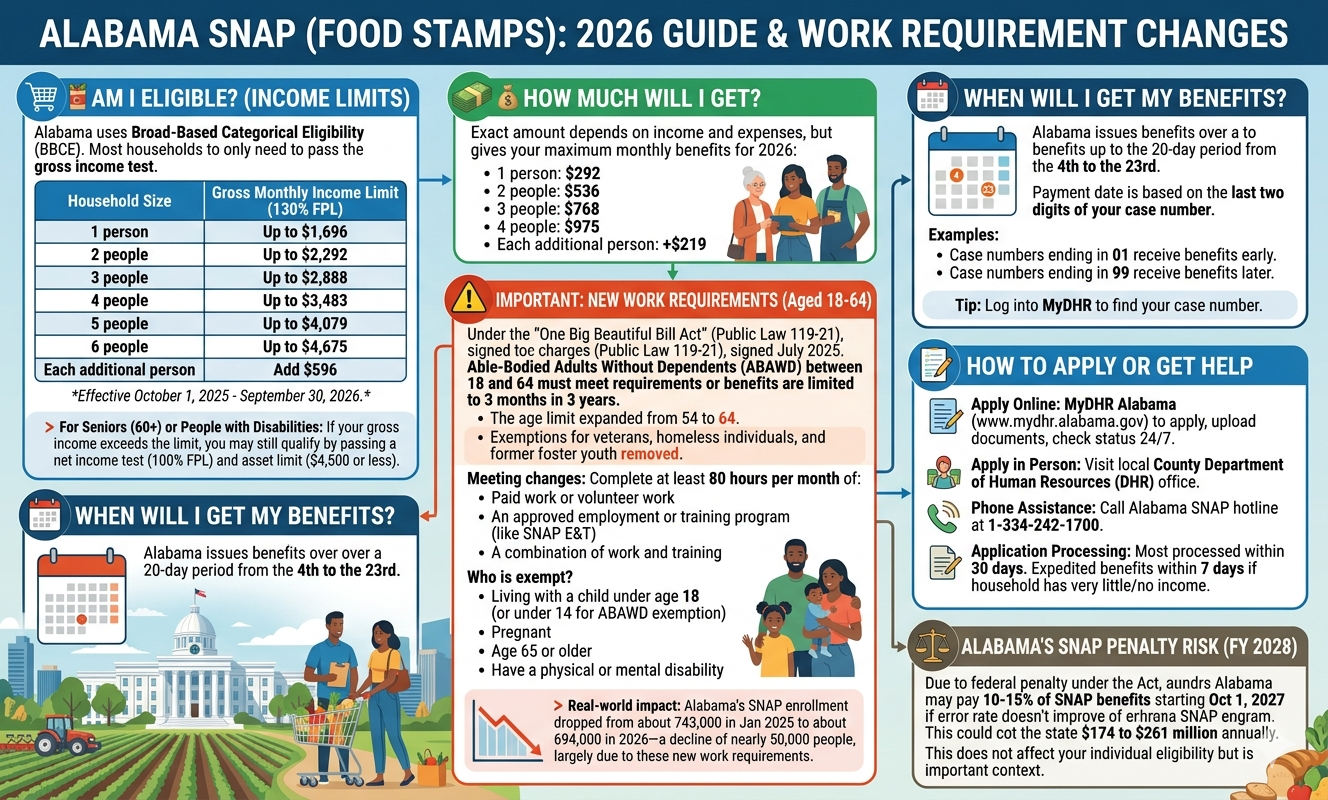
The reinstatement of work rules in Alabama for food stamp recipients signals a significant shift in the administration of the Supplemental Nutrition Assistance Program (SNAP). Beginning January 2023, Alabama is reintroducing work requirements that had been previously suspended, due largely to the COVID-19 pandemic. These changes necessitate an understanding of the new regulations and their implications for individuals and families relying on SNAP benefits.
Under the revised SNAP requirements, able-bodied adults without dependents (ABAWDs) aged 18 to 49 must adhere to specific work-related criteria to maintain their eligibility for food assistance. This includes engaging in at least 80 hours of work per month or participating in qualifying training programs, educational programs, or volunteer activities. Failure to meet these work requirements could lead to the loss of benefits, making it crucial for recipients to familiarize themselves with these stipulations.
The return of work rules emphasizes the administration’s objective to encourage self-sufficiency among SNAP participants. While the purpose of the program remains to provide essential food assistance to low-income households, the new regulations also aim to promote workforce participation. For many SNAP recipients, these changes could result in a dual benefit: not only do they receive nutritional support, but they also have the opportunity to engage more actively in the job market.
As these work rules come into effect, Alabama food stamp recipients must stay informed of their responsibilities and explore available resources that support compliance with new regulations. It is important for individuals and families to navigate these changes effectively, ensuring continued access to vital assistance while also embracing opportunities for employment and skill development.
Understanding SNAP Work Requirements
The Supplemental Nutrition Assistance Program (SNAP), commonly known as food stamps, is designed to provide nutritional assistance to eligible low-income individuals and families. An essential component of SNAP is its work requirements, which aim to promote self-sufficiency and employment among recipients. Understanding these requirements is critical for Alabama residents who rely on this program.
Under federal regulations, able-bodied adults without dependents (ABAWDs) must meet specific work criteria to retain their SNAP benefits. This demographic typically includes individuals aged 18 to 49 who do not live with dependent children. According to SNAP guidelines, these individuals are required to engage in work activities for at least 80 hours per month.
Eligible work activities can vary and include several categories. Employment is the most straightforward activity, but in addition to traditional jobs, SNAP recipients can satisfy work requirements by participating in vocational training or certain job training programs. Volunteer work, work experience programs, and community service projects can also qualify, provided they meet program specifications and contribute to skill development.
In terms of eligibility, recipients must not only meet income and resource limits but also comply with the work requirements set forth by both federal guidelines and state-specific adaptations. Alabama, like many states, may have additional provisions that affect how these requirements are implemented, including local job training resources available to recipients aimed at enhancing their employability.
Importantly, exceptions may apply for individuals who are exempt from work requirements due to various factors such as caring for a child, being mentally or physically unfit for work, or experiencing other specific hardships. Therefore, it is crucial for Alabama SNAP recipients to stay informed about both federal and state regulations to ensure compliance and continue receiving benefits.
Who Is Affected by the Work Rules?
The reinstatement of work rules for Supplemental Nutrition Assistance Program (SNAP) recipients in Alabama primarily targets able-bodied adults without dependents (ABAWDs). This demographic includes individuals who are between the ages of 18 to 49, who do not have children or elderly individuals in their care, and are considered capable of working. Under the new regulations, these individuals are required to engage in a work-related activity for a minimum of 80 hours per month to qualify for food assistance beyond a three-month eligibility period. This is a significant shift that can impact those who previously relied on SNAP without stringent work requirements.
In addition to ABAWDs, various exemptions apply that may influence who is affected by these work rules. For instance, individuals who are medically certified as unable to work, those who are pregnant, or those who are living in a household with dependent children are often exempt from these requirements. Additionally, individuals participating in certain educational programs or training may also be exempted. Understanding these exemptions is crucial for current and prospective SNAP recipients in Alabama, as they navigate their eligibility while contending with potential employment requirements.
As these changes are rolled out, it is essential for SNAP beneficiaries, especially able-bodied adults without dependents, to familiarize themselves with the specific stipulations of the work rules. Compliance is necessary to prevent loss of benefits, thereby emphasizing the importance of actively seeking employment or participating in a work program.
What Recipients Need to Do
With the reimplementation of work requirements for food stamp recipients in Alabama, individuals must take specific actions to ensure compliance with the new guidelines. The following steps outline the necessary measures recipients should take to meet the updated requirements effectively.
First and foremost, it is essential for recipients to familiarize themselves with the job search and training expectations. Each recipient is responsible for submitting employment status reports. To do this accurately, beneficiaries should maintain up-to-date records of their job applications, interviews, and any employment offers received. This documentation is crucial, as it will be required during periodic reviews conducted by the Alabama Department of Human Resources (DHR).
Next, recipients must enroll in job training programs if they are not already engaged in full-time work. The state offers various resources, including local workforce development centers, where individuals can find job training programs tailored to their skills and career aspirations. It is recommended to check the DHR website or contact local offices for a list of approved programs.
Additionally, recipients should actively participate in activities that enhance their employability, such as skills workshops and networking events. Engaging with these programs not only fulfills the work requirement but also improves the chances of finding stable employment.
It is crucial to set up a system for tracking job applications and interviews, such as using a dedicated notebook or digital tools. Keeping diligent records can help recipients provide evidence of job search efforts during the review process.
Lastly, if any changes occur in status, such as gaining employment or experiencing a change in training commitments, individuals must report this information to the DHR promptly to avoid any potential penalties. Compliance with these work requirements is essential for maintaining eligibility for food assistance in the state of Alabama.
Consequences of Non-Compliance
Food stamp recipients in Alabama must adhere to specified work requirements as part of their benefits eligibility. Failure to comply with these work rules can lead to significant repercussions, affecting both individuals and families relying on this essential assistance. Primarily, non-compliance may result in the loss of food stamp benefits, which can severely impact nutritional access and overall well-being.
When a recipient fails to meet the work requirements, they are typically issued a notice of action detailing the reasons for the potential loss of benefits. This notice is a critical document indicating what steps must be taken to rectify the situation and avoid sanctions. Depending on the circumstances, individuals may be disqualified from receiving assistance for a period, often ranging from one month to three years, contingent upon the nature of the non-compliance.
Reapplication for food stamp benefits may be a route taken after a loss of eligibility. However, it is crucial for individuals to understand that such applications are not guaranteed to be approved and must demonstrate compliance with the work requirements moving forward. For those who disagree with the decision made regarding their benefits due to non-compliance, there is an appeal process in place. Recipients must present their case promptly, usually within a set period, to contest the decision made about their benefits.
Engagement in the appeal process requires thorough documentation and may call for participation in hearings. Therefore, it is advisable for food stamp recipients to carefully read all communications from the Alabama Department of Human Resources and remain informed about their responsibilities. Adhering to work requirements is not just a legal obligation but also a vital aspect of managing food assistance in a way that supports both nutritional needs and economic stability.
Resources for Job Seekers
If you are receiving food stamps in Alabama and are seeking employment, several invaluable resources are available to assist you in your job search. These programs aim to support food stamp recipients in gaining the skills and knowledge needed to successfully enter the workforce.
Local workforce development programs play a crucial role in enhancing employability. Agencies like the Alabama Department of Rehabilitation Services and the Alabama Career Center offer tailored services, including job readiness workshops, resume assistance, and interview preparation. These programs help equip job seekers with essential skills that can significantly improve their chances of securing employment.
In addition to workforce development initiatives, various job training opportunities can further benefit food stamp recipients. Community colleges and vocational schools in Alabama often provide training programs in high-demand fields such as healthcare, manufacturing, and information technology. These educational programs not only enhance skill sets but also increase employability in competitive job markets, ultimately leading to better job prospects.
Furthermore, online tools and platforms that connect individuals with employment are becoming increasingly valuable. Websites like AlabamaJobLink.gov allow job seekers to search for available positions, create profiles, and receive notifications about upcoming job openings that match their skills and interests. These platforms facilitate direct connections between applicants and employers, streamlining the job search process.
By taking advantage of these resources, food stamp recipients can navigate the workforce landscape more effectively and improve their financial stability. Engaging with local programs, pursuing training opportunities, and utilizing online job search tools are essential steps in achieving successful employment outcomes.
State Agencies’ Role and Enforcement Mechanisms
The enforcement of work rules for Alabama food stamp recipients primarily falls under the auspices of the Alabama Department of Human Services (ADHS). As the state agency responsible for administering the Supplemental Nutrition Assistance Program (SNAP), the ADHS has established several mechanisms to ensure compliance with the reintroduced work requirements. These measures are aimed at both monitoring participant adherence and providing necessary support during the transition period.
To begin with, the ADHS will employ a systematic approach to monitor compliance with the work requirements. This monitoring may include regular checks and follow-ups with recipients to verify their engagement in qualifying work activities, such as employment, training programs, or community service. Reports may be generated by caseworkers to track participants’ progress, ensuring that individuals are meeting the outlined expectations.
Furthermore, the department is expected to implement a comprehensive support system for recipients navigating these changes. This could encompass a range of initiatives aimed at assisting individuals in fulfilling their job search obligations. Workshops, job fairs, and training programs designed to enhance job readiness may be organized by the ADHS. Additionally, the agency may promote collaborations with local organizations and employers to facilitate employment opportunities for food stamp recipients.
It is important for recipients to understand the full scope of their responsibilities and the supports available to them. The ADHS is committed to not only enforcing these work rules but also ensuring that individuals have access to resources that can help them succeed. By establishing clear communication channels and providing guidance, the agency aims to mitigate the challenges that may arise during this transition to compliance with the work requirements.
Success Stories: Supporting Recipients Through Change
As Alabama food stamp recipients navigate the recent reinstatement of work requirements, numerous individuals have demonstrated resilience and determination in finding stable employment. These success stories highlight not only personal achievements but also the community initiatives that have played a pivotal role in this process. One such inspiring story is that of Sarah, a single mother of two, who faced challenges in securing consistent work due to the demands of raising her children alone. By engaging with local workforce development programs, Sarah received essential training in customer service and resume writing, ultimately leading her to a part-time position at a local retail store.
John, another recipient who faced similar struggles, benefited from a job placement program that paired him with a mentor in the construction industry. This unique program not only provided him with hands-on training but also connected him to job opportunities that he previously thought were out of reach. John’s perseverance and the guidance from community support have resulted in a full-time job, giving him a renewed sense of purpose and stability.
Community organizations have stepped up to facilitate these transitional journeys, offering resources such as workshops on interview skills, financial literacy, and access to childcare services, which are vital for many food stamp recipients. Programs like “Pathways to Employment” have proven effective in providing comprehensive support, ensuring that individuals not only understand the work requirements but also have access to the tools needed to succeed in the job market.
These narratives of success are a testament to the resilience of Alabama’s food stamp recipients and the effectiveness of community resources. By highlighting these achievements, it becomes evident that with the right support and determination, individuals can navigate the complexities of work requirements and emerge with stable employment opportunities.
Conclusion and Final Thoughts
In light of the recent reinstatement of work rules for Alabama Food Stamp recipients, it is paramount for individuals in the Supplemental Nutrition Assistance Program (SNAP) to fully comprehend the requirements associated with their benefits. As outlined throughout this discussion, maintaining eligibility is intrinsically linked to adhering to these work requirements, which include registering for work, participating in job training programs, or securing employment.
Moreover, understanding these regulations is critical not only for personal compliance but also for fostering community resilience. For many Alabama residents, food assistance is a vital resource that helps bridge the gap during financially challenging times. Thus, being informed can prevent disruptions in assistance while allowing recipients to take advantage of available resources.
Community support systems play an integral role in this process. Local organizations and government initiatives are designed to assist people in meeting work requirements and access job training opportunities. SNAP recipients are encouraged to engage with these resources to ensure they remain compliant with the newly enforced rules.
It is essential to stay updated on any changes to SNAP regulations, as policies may evolve in response to economic conditions and public needs. Recipients should regularly check with the Alabama Department of Human Resources or trusted community organizations to receive accurate information and support. By doing so, they can navigate the complexities of the system more effectively, ensuring that their access to essential food resources is maintained.
In conclusion, understanding and complying with the work rules set forth for Alabama Food Stamp recipients is crucial. By actively participating in job training and leveraging community support, individuals can not only secure their assistance but also enhance their opportunities for sustainable employment and financial stability.