SNAP Payment Schedule September 2026 by State: Complete State-by-State Dates
Quick Answer
SNAP benefit payments for September 2026 will be issued on different dates depending on your state. Some states issue all benefits on September 1 (Alaska, North Dakota, Rhode Island, Vermont). Other states spread payments across the entire month—Florida and Texas issue benefits from September 1 through September 28. California issues CalFresh benefits during the first 10 days based on case number digits. Check your specific state schedule below to know exactly when your EBT card will be loaded.
USDA Food and Nutrition Service (state agencies administer)
Eligibility
Income-based; varies by state due to BBCE expansions
Income Limits
130% FPL minimum; many states expanded to 165%-200% FPL
Monthly Benefit
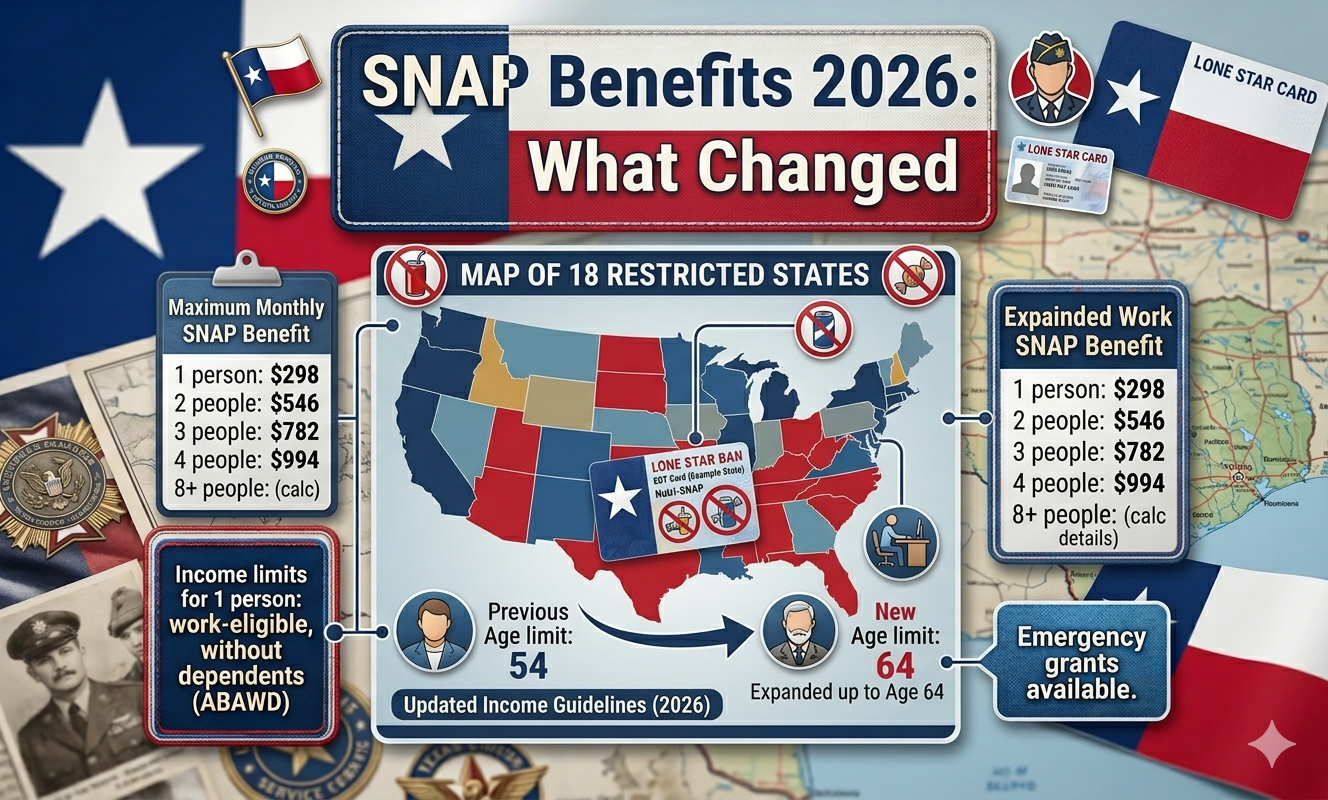
Up to $298 (1 person) – $1,789 (8 people) for 48 states
Application
Online through state SNAP portals
Processing Time
30 days standard; 7 days for expedited
Renewal
Every 6-24 months depending on state
Available States
All 50 states, DC, Guam, USVI
Last Updated
August 2026
What Is the SNAP Program?
The Supplemental Nutrition Assistance Program (SNAP), formerly known as food stamps, is a federal program that helps low-income individuals and families purchase nutritious food . The U.S. Department of Agriculture (USDA) provides funding and oversight, but each state administers the program and sets its own benefit issuance schedule .
SNAP benefits are loaded monthly onto an Electronic Benefits Transfer (EBT) card, which works like a debit card at participating grocery stores, supermarkets, farmers markets, and some online retailers like Amazon and Walmart .
For September 2026, benefit amounts are based on the fiscal year 2026 maximums, which run from October 1, 2025, through September 30, 2026 .
SNAP Maximum Monthly Benefits by Household Size (September 2026)
The following maximum monthly allotments apply to the 48 contiguous states and Washington D.C. :
Household Size
Maximum Monthly SNAP Benefit
1 person
$298
2 people
$546
3 people
$785
4 people
$994
5 people
$1,183
6 people
$1,421
7 people
$1,571
8 people
$1,789
Each additional person
+$218
Alaska, Hawaii, Guam, and the U.S. Virgin Islands have higher maximum allotments due to higher food costs . The minimum SNAP benefit for the 48 states and DC is $24 per month .
How benefits are calculated: Your actual benefit is determined by subtracting 30% of your household’s net income from the maximum allotment for your household size. For example, if your household’s net income is $500 per month and the maximum for your household size is $994, your benefit would be $994 – ($500 × 0.3) = $844 .
SNAP Eligibility Requirements for September 2026
Who Qualifies
To qualify for SNAP benefits, you must meet several requirements:
Income Limits: Most households must pass both gross and net income tests:
Gross income must be at or below 130% of the Federal Poverty Level (FPL)
Net income must be at or below 100% FPL after deductions
For a household of 4 in 2026, the 130% FPL gross income limit is approximately $3,575 per month . However, over half of states have expanded these limits through Broad-Based Categorical Eligibility (BBCE), allowing gross income limits up to 165%-200% FPL .
Exemptions from the gross income test: Households with a member who is age 60 or older or receiving disability benefits only need to meet the net income test, not the gross income test .
Asset limits: Most households must have assets under $2,750 ($4,250 if a household member is elderly or disabled). Households qualifying through BBCE categorical eligibility may have no asset limit at all .
Citizenship: You must be a U.S. citizen or have qualified immigration status. Undocumented immigrants do not qualify, but U.S.-citizen children in mixed-status households can receive benefits .
Work requirements: Able-bodied adults without dependents (ABAWDs) ages 18-54 must work at least 20 hours per week or participate in work training. The One Big Beautiful Bill Act, signed in July 2025, expanded the ABAWD age range to 18-64 .
Who Does NOT Qualify
Undocumented immigrants
Full-time college students (with limited exceptions)
Certain non-citizens who do not meet qualified status requirements
Individuals who intentionally violate SNAP program rules
Example 1: Family of 4 earning $42,000 per year ($3,500/month)
Gross income is below 130% FPL ($3,575/month), so the household passes the gross income test
After deductions (standard deduction, shelter costs), net income likely falls below the limit
They would likely qualify for SNAP benefits
Example 2: Senior receiving SSI ($1,100/month)
Seniors are exempt from the gross income test
If net income is at or below 100% FPL, they qualify
Medical deductions over $35/month can further reduce countable income
They would likely qualify for SNAP
Example 3: Single mother with 2 children earning $38,000/year
$38,000 ÷ 12 = $3,167/month
For a household of 3, 130% FPL is approximately $2,694/month
This household exceeds the standard gross income limit
However, if the state has BBCE expanded to 165%-200% FPL, they may still qualify
Check your specific state’s expanded limits
Example 4: College student living alone, working part-time
Most students must work at least 20 hours per week to qualify
If working part-time and meeting income limits, they may qualify
Students participating in federal work-study also qualify
September 2026 SNAP Payment Schedule by State
SNAP payment schedules vary significantly by state. Below is the complete state-by-state schedule for September 2026 based on USDA-approved issuance schedules .
States Issuing All Benefits on a Single Date
State
September 2026 Payment Date
Alaska
September 1
North Dakota
September 1
Rhode Island
September 1
Vermont
September 1
New Hampshire
September 5
South Dakota
September 10
States with Multiple Payment Dates
State
Payment Window (September 2026)
Based On
Alabama
September 4-23
Case number
Arizona
September 1-13
First letter of last name
Arkansas
September 4-13
Last digit of SSN
California
September 1-10
Last digit of case number
Colorado
September 1-10
Last digit of SSN
Connecticut
September 1-3
First letter of last name
Delaware
September 2-23
First letter of last name
Florida
September 1-28
9th and 8th digits of case number
Georgia
September 5-23
Last two digits of ID number
Hawaii
September 3-5
First letter of last name
Idaho
September 1-10
Last number of birth year
Illinois
September 1-20
Case type and case name
Indiana
September 5-23
First letter of last name
Iowa
September 1-10
First letter of last name
Kansas
September 1-10
First letter of last name
Kentucky
September 1-19
Last digit of SSN
Louisiana
September 1-23
Last digit of SSN
Maine
September 10-14
Last digit of birthday
Maryland
September 4-23
First three letters of last name
Massachusetts
September 1-14
Last digit of SSN
Michigan
September 3-21
Last two digits of ID number
Minnesota
September 4-13
Last digit of case number
Mississippi
September 4-21
Last two digits of case number
Missouri
September 1-22
Birth month + last name
Montana
September 2-6
Case number
Nebraska
September 1-5
First letter of last name
Nevada
September 1-10
First letter of last name
New Jersey
September 1-5
Case number
New Mexico
September 1-20
Last digit of SSN
New York
September 1-9
Case number
North Carolina
September 3-21
Last digit of SSN
Ohio
September 2-20
Case number
Oklahoma
September 1-10
First letter of last name
Oregon
September 1-9
Last digit of SSN
Pennsylvania
September 3-14
Case number
South Carolina
September 1-19
Case number
Tennessee
September 1-20
First letter of last name
Texas
September 1-28
EDG number
Utah
September 5, 11, or 15
Case number
Virginia
September 1-7
Case number
Washington
September 1-20
Case number
West Virginia
September 1-9
First letter of last name
Wisconsin
September 1-15
Case number
Wyoming
September 1-4
First letter of last name
Detailed State Payment Schedules
California (CalFresh) – September 2026
California issues CalFresh benefits during the first 10 days of each month. Your payment date is based on the last digit of your case number :
Last Digit of Case Number
Payment Date
1
September 1
2
September 2
3
September 3
4
September 4
5
September 5
6
September 6
7
September 7
8
September 8
9
September 9
0
September 10
Example: If your case number ends in 5, your September CalFresh benefits will be available on September 5.
Florida – September 2026
Florida issues SNAP benefits from September 1 through September 28. To find your payment date, use the 9th and 8th digits of your case number (read backwards, ignoring the very last digit) :
9th and 8th Digits
Payment Date
00-03
September 1
04-06
September 2
07-10
September 3
11-13
September 4
14-17
September 5
18-20
September 6
21-24
September 7
25-27
September 8
28-31
September 9
32-34
September 10
35-38
September 11
39-41
September 12
42-45
September 13
46-49
September 14
50-53
September 15
54-57
September 16
58-60
September 17
61-64
September 18
65-67
September 19
68-71
September 20
72-74
September 21
75-78
September 22
79-81
September 23
82-85
September 24
86-88
September 25
89-92
September 26
93-95
September 27
96-99
September 28
Texas – September 2026
Texas distributes SNAP benefits from September 1 through September 28 based on the last two digits of your Eligibility Determination Group (EDG) number :
Maryland distributes Food Supplement benefits based on the first three letters of your last name :
First 3 Letters of Last Name
Payment Date
AAA – ANZ
September 4
AOA – AZZ
September 5
BAA – BEZ
September 6
BFA – BZZ
September 7
CAA – CNZ
September 8
COA – CZZ
September 9
DAA – DNZ
September 10
DOA – DZZ
September 11
EAA – FZZ
September 13
GAA – GNZ
September 14
GOA – GZZ
September 15
HAA – HZZ
September 16
IAA – JZZ
September 17
KAA – LNZ
September 18
LOA – MNZ
September 19
MOA – MZZ
September 20
NAA – PAZ
September 21
PBA – SAZ
September 22
SBA – ZZZ
September 23
Note: Benefits are available by 5 AM on your assigned date. If your date falls on a weekend or state holiday, benefits typically load the previous business day .
How to Find Your Exact SNAP Payment Date
If you’re unsure which payment date applies to you, here’s how to check:
Review your case paperwork. Your SNAP approval letter or EBT card documents will show your case number, SSN digit reference, or other identifier.
Check your state’s SNAP portal. Each state has an online portal where you can check your benefit status. Links are listed in the Resources section below.
Call the EBT customer service number. The number is on the back of your EBT card. You can check your balance and next payment date.
Contact your local SNAP office. Your local Department of Human Services or Social Services office can confirm your payment date.
Look for your state’s official mobile app. Many states have mobile apps for checking EBT balances and payment schedules.
New SNAP Food Purchase Restrictions in Select States (Effective September 2026)
Beginning in September 2026, several states are implementing new restrictions on what foods can be purchased with SNAP benefits under USDA demonstration waivers :
States with Active Restrictions
State
Effective Date
What’s Restricted
South Carolina
August 31, 2026
Candy, energy drinks, sugary sodas, sweetened tea, fruit punch, lemonade
North Dakota
September 1, 2026
Candy, energy drinks, beverages with 5+ grams added sugar or <50% fruit juice
Montana
September 30, 2026
Candy, high-sugar beverages (10+ grams per 8 oz), energy drinks, long-lasting desserts
Ohio
October 1, 2026
Sugar-sweetened sodas, fountain drinks, energy drinks
Virginia
October 1, 2026
Soda (including diet), carbonated energy drinks, beverages with 5+ grams added sugar
States with Existing Restrictions
Arkansas, Florida, Idaho, Indiana, Louisiana, Oklahoma, Texas, and Utah already have similar restrictions in place. Some of these states’ restrictions were temporarily blocked by court order in June 2026, so check your state’s current rules .
Important: These restrictions apply to what you can purchase, not the amount of your benefit. Your monthly SNAP allotment remains the same.
How to Apply for SNAP Benefits
Online Application
Most states offer online applications. You can typically apply through your state’s Department of Human Services or Social Services website. For a complete list of state application portals, visit the USDA’s Food and Nutrition Service website.
Required Documents
When applying for SNAP, have these documents ready:
Identification (driver’s license, state ID, or passport)
Social Security numbers for all household members
Proof of income (pay stubs, tax returns, SSI/SSDI award letters)
Proof of expenses (rent/mortgage, utilities, childcare, medical bills for elderly/disabled)
Bank statements (for asset verification)
Immigration documents (if applicable)
Processing Time
Standard processing: 30 days from application date
Expedited processing: 7 days for households with:
Monthly income under $150 and less than $100 in liquid assets, or
Gross income less than monthly rent and utilities, or
A household member is elderly or disabled and has no income
Renewal Process
SNAP benefits must be renewed periodically (typically every 6-24 months depending on your state). You will receive a recertification notice before your benefits expire. Complete the renewal application and return it by the deadline to avoid benefit interruption.
Common Reasons SNAP Applications Are Denied
Reason
Explanation
Income exceeds limits
Gross or net income above state thresholds
Not meeting work requirements
ABAWD not working required hours
Immigration status
Not a qualified non-citizen or lack of documentation
Missing documents
Failed to provide required proof of income, residency, or identity
Asset limits exceeded
Liquid assets above $2,750 ($4,250 for elderly/disabled households)
Student status
Full-time student not meeting exemption criteria
Prior disqualification
Violation of SNAP rules in previous periods
Residency requirements
Not living in the state where you applied
Appeals Process
If your SNAP application is denied, you have the right to appeal. Your denial letter will include instructions and a deadline for requesting a fair hearing (typically 30-90 days). Contact your state’s SNAP agency to request a hearing and submit any additional documentation that supports your eligibility.
Common Mistakes to Avoid When Applying for SNAP
Incomplete applications: Missing required information or signatures is the most common reason for delays.
Not reporting all income: All household income must be reported, including child support, SSI, SSDI, and income from part-time work.
Ignoring the interview: Most states require a phone interview. Missing your scheduled interview will cause delays or denial.
Failure to report household changes: Income changes, address changes, or household member changes can affect your benefit amount. Report changes within 10 days.
Missing the renewal deadline: Submit your recertification application before your benefits expire.
Earned Income Tax Credit (EITC): Tax credit for low-to-moderate income workers.
Frequently Asked Questions
1. When exactly will my SNAP benefits be deposited in September 2026?
Your deposit date depends on your state’s schedule and your case number, SSN digit, or last name. Check the state-specific table above for your payment window.
2. What time do SNAP benefits get deposited?
In most states, benefits are available by 6 AM on your payment date. Maryland loads benefits by 5 AM, and some states load them by midnight .
3. Are SNAP benefits taxable?
No, SNAP benefits are not considered taxable income and do not need to be reported on your taxes.
4. Can I use SNAP benefits to buy hot food?
In most states, SNAP cannot be used to purchase hot prepared food, though some states have Restaurant Meals Programs for elderly, disabled, or homeless individuals.
5. What can I buy with SNAP in September 2026?
You can buy fruits, vegetables, meat, poultry, fish, dairy products, breads, cereals, snack foods, and seeds/plants for growing food. You cannot buy alcohol, tobacco, vitamins, medicines, or non-food items. Restrictions on sugary drinks and candy now apply in several states .
6. How long do I have to use my SNAP benefits?
SNAP benefits on your EBT card do not expire monthly—they roll over. However, if unused for 9-12 months, benefits may be removed from the card.
7. Can I use SNAP benefits online?
Yes, most states allow online grocery shopping through retailers like Walmart, Amazon, and regional grocers using your EBT card.
8. What happens if my payment date falls on a weekend or holiday?
Benefits typically load on the previous business day or on the scheduled date if the state system processes automatically.
9. Can college students get SNAP?
Students must meet specific exemptions (working 20+ hours per week, federal work-study, caring for a dependent child, or receiving TANF). Most full-time students do not qualify.
10. Do I need to report changes in my income?
Yes, you must report income changes, address changes, and household changes within 10 days in most states. Failure to report can result in overpayment issues.
11. Can I use SNAP in another state?
Yes, SNAP benefits work in all 50 states. Your EBT card is accepted at any participating retailer nationwide.
12. What is the maximum income to qualify for SNAP?
The federal minimum is 130% FPL ($3,575/month for a family of 4). However, many states have expanded this to 165%-200% FPL through BBCE .
Key Takeaways
SNAP benefit payment dates for September 2026 vary by state. Check your specific state schedule above.
Maximum monthly benefits range from $298 for 1 person to $1,789 for 8 people in the 48 contiguous states.
Eligibility depends on income, household size, citizenship, and work requirements. Over half of states have expanded income limits through BBCE.
New food purchase restrictions on sugary drinks and candy take effect in South Carolina (Aug 31), North Dakota (Sept 1), Montana (Sept 30), Ohio, and Virginia (Oct 1).
Apply online through your state SNAP portal. Standard processing takes 30 days; expedited processing takes 7 days.
If your application is denied, you have the right to appeal within the deadline stated in your denial letter.
SNAP recipients may also qualify for free school meals, LIHEAP, Medicaid, and other assistance programs.
Report income and household changes within 10 days to maintain accurate benefit amounts.
Benefits are loaded on EBT cards and can be used at grocery stores, farmers markets, and online retailers.
Always verify your specific payment date and benefit amount with your state SNAP agency or online portal.