Instant Answer: What You Need to Know About SNAP Right Now
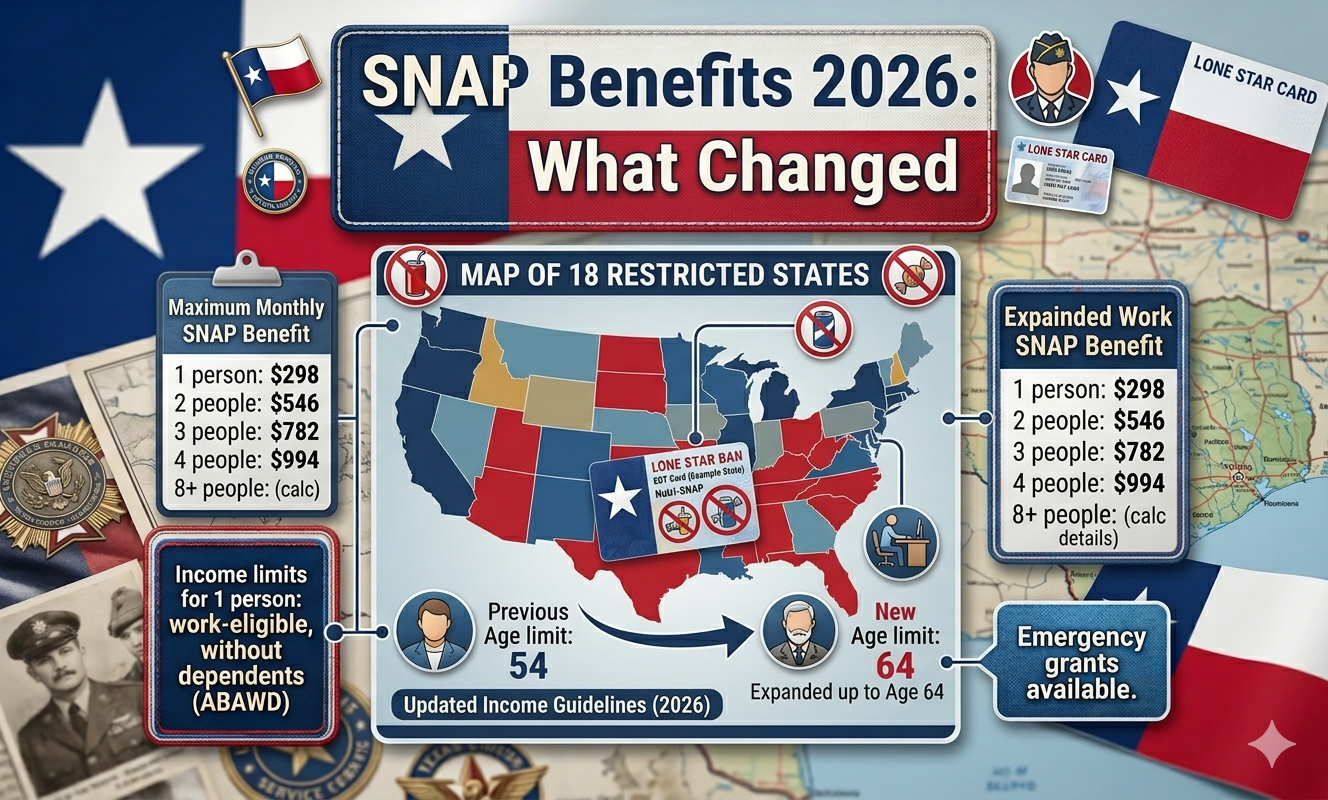
Yes, SNAP benefits have changed significantly in 2026. As of today, 18 states have banned purchasing soda, candy, and sugary drinks with EBT cards. Work requirements now apply to able-bodied adults up to age 64—up from 54. The maximum monthly benefit for a family of four is $994. Payment schedules vary by state, with June 2026 distributions happening between June 1 and June 28 depending where you live.
If you currently receive SNAP or are thinking about applying, these changes affect what you can buy, whether you qualify, and how long you can keep getting benefits. Keep reading to learn exactly what changed and how it impacts your household.
What Americans Need to Know Right Now
You need to act fast if your situation has changed. The federal government expanded work requirements starting February 1, 2026. Adults 18-64 without dependents or disabilities must now work, volunteer, or attend job training for at least 80 hours per month. Fail to meet this for three months within any three-year period, and you lose your benefits .
Also, non-citizen eligibility just got tighter. Starting April 1, 2026, certain immigrant groups who previously qualified for SNAP no longer do. Legal Permanent Residents who have been in the country less than five years generally lose eligibility unless they are under 18, blind, disabled, veterans, or have 40 qualifying work quarters .
And your EBT card may decline at checkout. If you live in Texas, Florida, Indiana, or 15 other states, you can no longer buy soda, energy drinks, candy, or certain sugary beverages with SNAP benefits. The restrictions started rolling out January 1, 2026, with more states joining throughout the year .
Latest Updates Today on Programa Asistencial de Nutrición Suplementaria
Junk Food Bans Now Active in 18 States
The Trump administration’s “Make America Healthy Again” (MAHA) initiative drove these changes. Agriculture Secretary Brooke Rollins stated the goal is to tackle chronic disease and encourage healthier eating .
Later in 2026: Arkansas, Tennessee (July); Hawaii (Aug 1); North Dakota (Sept 1); Missouri (Oct 1)
What gets blocked at checkout: Soft drinks, sugary beverages, energy drinks, candy, sweetened drinks, prepared desserts, and in some states like Iowa, all taxable food items .
Here’s what this means in real life: If you try to buy a Coke and bread with your EBT card, the Coke gets declined but the bread goes through. Your card works fine for approved items—just not the restricted ones.
Work Requirements Expanded—And They’re Strict
Previously: Adults 55-64 were exempt from work rules.
Now (as of Feb 1, 2026): Adults 18-64 must meet the 80-hour monthly requirement unless exempt .
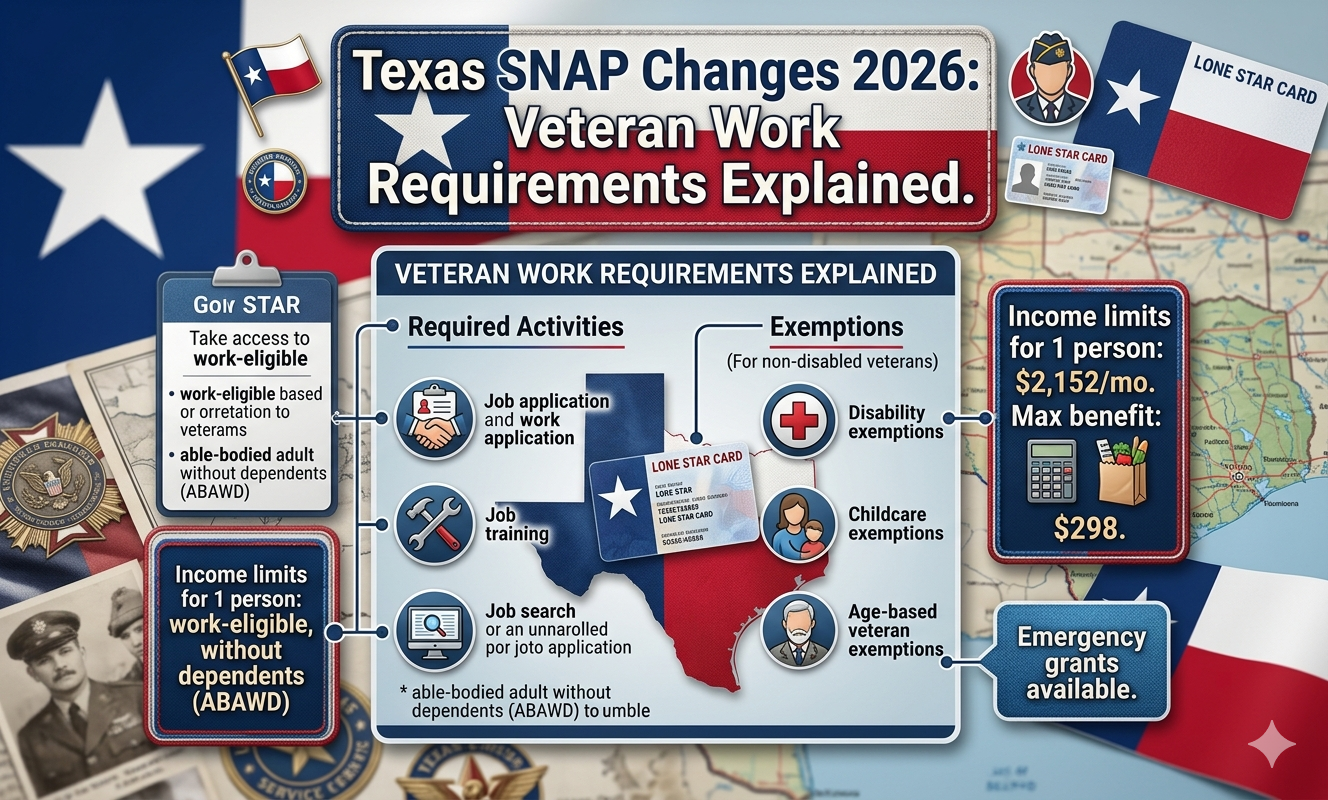
Who must work: Able-bodied adults without dependents (ABAWDs). No more exemptions for veterans, homeless individuals, or foster youth in most cases .
Who is exempt: People with certified disabilities, caregivers for children under 14, students, and pregnant women .
The penalty is harsh: Miss the requirement for any three months in a 36-month period, and you lose SNAP eligibility entirely—not just a benefit reduction .
Non-Citizen Eligibility Drastically Cut
Starting April 1, 2026, only specific immigrant groups remain eligible for SNAP :
Still eligible:
Cuban or Haitian entrants admitted on or after April 21, 1980
COFA (Compact of Free Association) residents
Legal Permanent Residents over 18 with 5+ years in the U.S.
Legal Permanent Residents under 18 (regardless of time in U.S.)
LPRs who are blind, disabled, veterans, active-duty military/dependents, or have 40 qualifying work quarters
What happens if you lose eligibility: Illinois has a backup state food program (VTTC) for some non-citizens, but funding may run out. If funds are gone, they may replenish July 1, 2026 .
New Deduction: Home Internet Counts as a Utility
Good news: Home internet is now treated as a basic utility expense. You can deduct your internet bill from your income, which may increase your monthly benefit amount .
Health exemptions expanded: Temporary illnesses now qualify with proper documentation .
Who Qualifies for SNAP in 2026
Income Limits (October 1, 2025 – September 30, 2026)
For most households: Your gross monthly income (before taxes) must be at or below 130% of the federal poverty level. Your net income (after deductions) must be at or below 100% of poverty .
Here are the current limits for the 48 contiguous states and D.C. :
Household Size
Gross Monthly Income (130% poverty)
Net Monthly Income (100% poverty)
1
$1,696
$1,305
2
$2,292
$1,763
3
$2,888
$2,221
4
$3,483
$2,680
5
$4,079
$3,138
6
$4,675
$3,596
7
$5,271
$4,055
8
$5,867
$4,513
Each extra person
+$596
+$459
Special rules if you’re elderly (60+) or disabled: The gross income test does NOT apply to households with an elderly or disabled member. You only need to pass the net income test .
If elderly/disabled members live separately: Higher gross income limit of 165% of poverty applies—$2,152 for a single person .
Work Requirement Rules
You must meet work requirements if: You are 18-64, able-bodied, have no dependents, and are not exempt.
You are exempt if you: Have a certified disability, care for a child under 14, are a student, are pregnant, or are medically unable to work .
Citizenship Requirements (Effective April 1, 2026)
Eligible immigrants: U.S. citizens, Lawful Permanent Residents with 5+ years (or exceptions), Cuban/Haitian entrants (since 4/21/1980), COFA residents .
NOT eligible: Most LPRs with less than 5 years who don’t meet exceptions, undocumented immigrants, certain visa holders.
What happens at redetermination: If you currently receive SNAP but are now ineligible based on these rules, your benefits will end at your next redetermination date. Illinois has already sent notices to affected households .
How Much Help You Can Get
Maximum Monthly SNAP Benefits (FY 2026)
Household Size
Maximum Monthly Benefit (48 states & D.C.)
1
$298
2
$545
3
$781
4
$994
5
$1,180
6
$1,417
7
$1,566
8
$1,790
Each extra person
+$224
How your actual benefit is calculated: Maximum allotment for your household size minus 30% of your net monthly income = your benefit .
Alaska and Hawaii have higher limits. A family of 4 in Alaska can receive up to 1,248maximumbenefit.InHawaii,it’s1,723 .
Junk food bans vary by state. Texas bans sweetened drinks and candy. Iowa bans all taxable food items except seeds and plants. Florida bans soda, energy drinks, candy, and prepared desserts. Check your state’s specific list .
How to Apply for SNAP (Step-by-Step)
Step 1: Check Your Eligibility
Most states have an online pre-screening tool. Visit your state’s SNAP website or use the USDA’s screening tool.
Step 2: Gather Required Documents
You will need:
Proof of identity (driver’s license, state ID, passport)
Proof of income (pay stubs, benefit letters, child support)
Proof of expenses (rent/mortgage, utilities, childcare, medical bills if elderly/disabled)
Immigration documents (if applicable)
Bank statements (for some states)
Pro tip: Scan or photograph everything before you apply. Many states let you upload documents online.
Step 3: Submit Your Application
Three ways to apply:
Online (fastest): Most states have online portals. Search “[your state] SNAP application” or use the USDA’s state directory.
By phone: Call your state’s SNAP hotline. Wait times can be long—call early morning.
In person: Visit your local Department of Social Services or SNAP office. Bring all documents.
Step 4: Complete the Interview
Most states require an interview, usually by phone. They will ask about your income, expenses, and household situation. Be honest and accurate.
Step 5: Wait for Decision
Processing time: Federal law requires 30 days max for regular applications. Expedited SNAP (for households with under 150inmonthlyincomeor100 in liquid assets) must be processed within 7 days .
You will receive: An EBT card in the mail. Benefits are loaded monthly according to your state’s schedule.
When Will You Receive Benefits?
June 2026 SNAP Payment Schedule by State
Benefits are distributed on specific dates based on where you live. Here’s when June 2026 payments go out :
Single-day states: Alaska (June 1), North Dakota (June 1), Rhode Island (June 1), Virgin Islands (June 1), Vermont (June 1), New Hampshire (June 5), South Dakota (June 10)
Find your exact date: Check your state’s SNAP website using your case number or last name—many states assign specific dates based on these factors .
Common Mistakes That Delay Approval
Mistake #1: Missing Paperwork
Why it matters: Missing documents stop your application cold. The clock keeps ticking, but your case won’t move forward.
Fix it: Submit everything at once. If you can’t find something, submit an explanation and proof you requested the document. Don’t wait.
Mistake #2: Income Reporting Errors
Why it matters: Even small mistakes (forgetting a side job, reporting gross when they need net) can trigger fraud investigations or denials.
Fix it: Report ALL income—wages, child support, Social Security, unemployment, disability, gifts over $300, even irregular cash work.
Mistake #3: Not Updating Changes
Why it matters: If you get a raise, start a new job, or someone moves in/out and don’t report it, you could owe benefits back. That’s an overpayment—and they WILL collect.
Fix it: Report changes within 10 days (or whatever your state requires). Take photos of your reports as proof.
Mistake #4: Ignoring Work Requirements
Why it matters: As of 2026, missing the 80-hour monthly requirement for three months means you lose SNAP completely—not just a warning.
Fix it: Track your hours. Keep proof: pay stubs, volunteer sign-in sheets, training certificates. If you’re exempt, get documentation from a doctor or your caseworker.
Mistake #5: Falling for Scams
SCAM WARNING: No legitimate agency will ever call or text asking for your EBT card number, PIN, or Social Security number. Hang up. Do not respond. The USDA does NOT charge for SNAP applications—anyone asking for a fee is scamming you .
Real scams happening now: Texts saying “Your SNAP benefits are blocked — click this link to reactivate.” Fake social media accounts offering “expedited benefits” for a fee. People offering to sell EBT cards.
What to do: Only use official .gov websites. Never share your PIN. If someone asks for it, they are stealing from you.
What This Means for Families in Real Life
Groceries: What You Can and Can’t Buy Now
In 18 states, your grocery run just changed. If you’re in Texas, Florida, Indiana, or the other restricted states, you can’t use SNAP for soda, candy, or sugary drinks anymore .
What this looks like in practice: Maria in Houston used to buy her kids fruit juice boxes and granola bars for school lunches. The juice boxes now get declined at checkout. She has to pay cash or switch to water and unsweetened juice.
What you CAN still buy with SNAP: Bread, milk, eggs, meat, fish, poultry, fruits, vegetables, rice, beans, cereal, baby formula, seeds, and plants that grow food. Hot prepared foods and alcohol are still not allowed.
Healthcare: How SNAP Connects to Medicaid
SNAP and Medicaid often share eligibility systems. If you qualify for SNAP, you likely qualify for Medicaid or CHIP for your kids. Apply for both at the same time through your state’s portal.
Rent and Utilities: SNAP Helps You Keep Housing
Every dollar you spend on rent and utilities reduces your countable income for SNAP. This means higher SNAP benefits. Document everything—lease agreements, utility bills, even rent receipts if you pay cash.
New for 2026: Home internet counts as a utility deduction. Keep your internet bills .
Childcare: Work Requirement Relief for Parents
If you care for a child under 14, you are exempt from work requirements . This is huge for single parents who can’t afford daycare. But note: This exemption may not apply if your child is in school full-time—check your state’s rules.
Monthly Budgeting: Plan Around Payment Dates
Don’t get caught short. If your benefits arrive on June 10th, don’t schedule a big grocery trip for June 9th. Know your date. Budget for the full month. Many families run out of benefits in the third week—plan cheaper meals for week 4.
Government and Political Context Behind the Updates
Why Are All These Changes Happening Now?
Three major drivers: The “Make America Healthy Again” (MAHA) initiative, the One Big Beautiful Bill Act (OBBBA), and a broader federal push to reduce SNAP spending.
MAHA and the junk food bans: The Trump administration framed this as a health crusade. Robert F. Kennedy Jr. praised the 18 governors leading “SNAP reform to restore the health of Americans—especially our kids” . Critics say it’s government overreach into personal choice and ignores that healthy food is often more expensive.
OBBBA and work requirements: The One Big Beautiful Bill Act ended pandemic-era SNAP expansions and tightened work rules. Raising the age limit from 54 to 64 is projected to save billions but will push hundreds of thousands of older workers off benefits .
Non-citizen restrictions: Public Law 119-21 dramatically narrowed immigrant eligibility, effective April 1, 2026. This follows years of debate over whether non-citizens should access federal benefits.
Federal vs. State Control
SNAP is funded by the federal government but administered by states. This creates variation:
Junk food bans: Only 18 states chose to implement them. Your buying power depends entirely on where you live.
Payment schedules: Each state sets its own calendar.
Work requirement enforcement: Some states are stricter than others. Virginia, for example, is prioritizing household composition verification in March 2026 .
What’s Coming Next
More states may join junk food bans. The MAHA initiative is actively recruiting governors.
Error rate penalties: States must reduce SNAP error rates to 6% within a year or lose federal funding . This means more intense verification and possibly more denials.
State food programs as backup: Illinois created the VTTC State Food program for non-citizens who lose SNAP. Other states may follow if federal cuts continue .
FAQ: Real Questions Americans Are Googling
Who qualifies for SNAP benefits in 2026?
Most low-income households with gross income at or below 130% of poverty—1,696/monthforasingleperson,1,696/monthforasingleperson,3,483/month for a family of four. Elderly and disabled households only need to meet net income limits. Immigrants must meet stricter rules effective April 1, 2026 .
How much does SNAP pay per month?
Maximum: 298foroneperson,545 for two, 781forthree,994 for four. Actual amount depends on your income. Average household benefit is $354.32 per month .
Can I get SNAP if I work?
Yes. Working is encouraged. You can work and still qualify if your income is below the limits. In fact, if you’re able-bodied without dependents, you MUST work (or volunteer/train) at least 80 hours per month to keep benefits beyond three months .
How long does SNAP approval take?
Regular applications: up to 30 days. Expedited (for households with under 150monthlyincomeor100 in assets): within 7 days .
What documents are required for SNAP?
Proof of identity, Social Security numbers for everyone in household, proof of income (pay stubs, benefit letters), proof of expenses (rent, utilities, childcare, medical if elderly/disabled), and immigration documents for non-citizens .
Can I buy hot food with SNAP?
Generally no. Hot prepared foods are not allowed except for certain elderly, disabled, or homeless individuals in some states. The junk food bans don’t change this—they just restrict specific cold items like soda and candy .
What happens if I don’t meet work requirements?
You lose SNAP eligibility entirely after three months of non-compliance within a 36-month period. Not a reduction—complete loss .
Are seniors required to work for SNAP?
No. Adults 60+ are exempt from work requirements regardless of disability status .
How do I check my SNAP balance?
Call the number on the back of your EBT card, check your last receipt, or log into your state’s EBT portal. Never share your card number or PIN with anyone who contacts you.
What should I do if my EBT card is declined for no reason?
First, check your balance. Second, try a different store—some have system issues. Third, call your state’s EBT customer service number. If you’re in a restricted state and trying to buy soda/candy, that’s the reason—your card works, but the item is blocked .
If you’re in a restricted state (18 of them), you can no longer buy soda, candy, or sugary drinks with SNAP. Your EBT card will decline those items.
Work requirements now apply up to age 64. If you’re 55-64 and able-bodied, you must work, volunteer, or train 80 hours monthly or risk losing benefits after three missed months.
Non-citizen eligibility narrowed dramatically on April 1, 2026. Many Legal Permanent Residents with less than five years in the U.S. no longer qualify unless exempt.
Home internet can now be deducted from your income, potentially increasing your benefit.
Maximum benefit for a family of four is $994, unchanged from previous fiscal year but with tighter eligibility.
Who benefits most from these changes? Honestly, no one. These are cuts and restrictions, not expansions. The people least affected are elderly, disabled individuals, and parents of young children—they keep their exemptions and deductions.