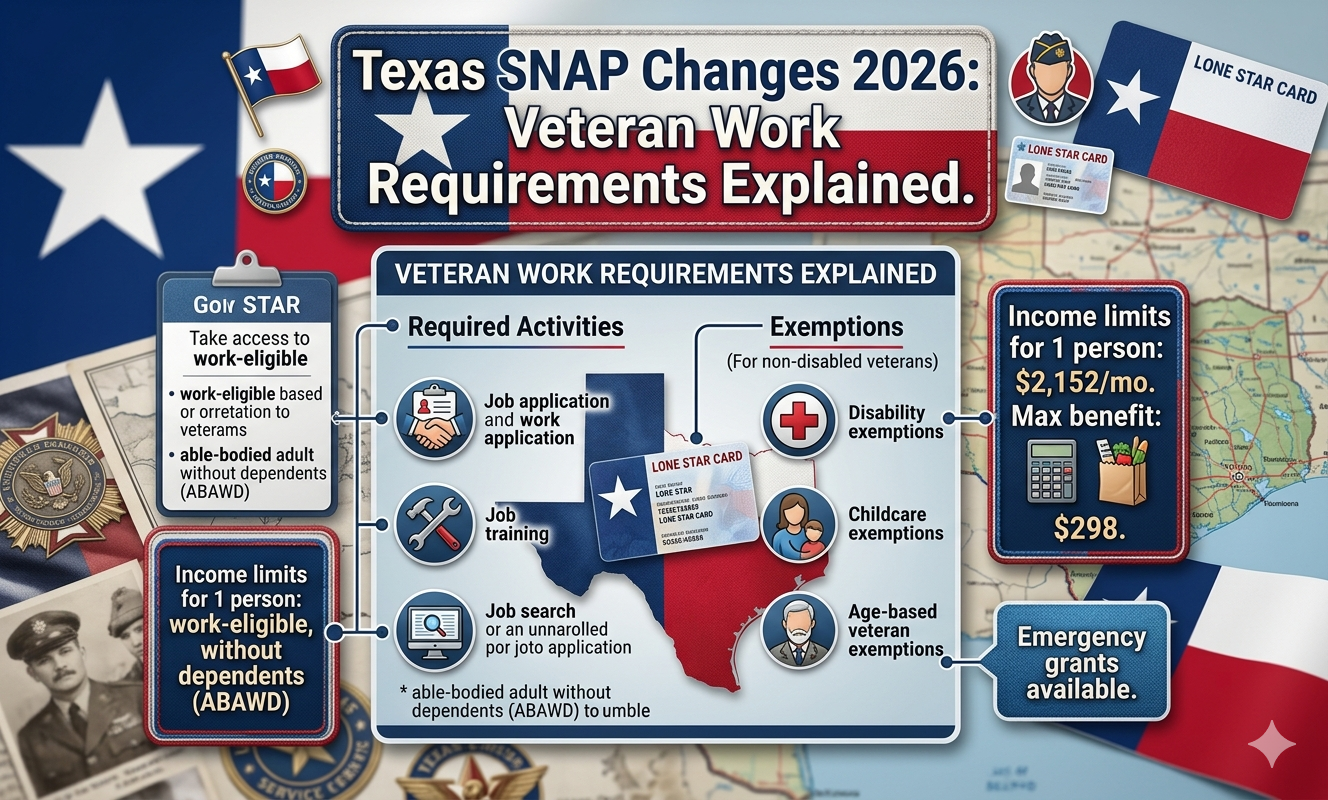
The Supplemental Nutrition Assistance Program (SNAP) is a vital lifeline for many individuals and families across the United States, providing essential support for food security. Effective April 1, 2026, significant changes will be implemented regarding SNAP benefits for Texas veterans, particularly affecting those aged 18 to 64 who do not have young children. These modifications will alter the landscape of SNAP assistance provided to this demographic, transitioning from an automatic exemption system to a model that necessitates participation in specific work-related activities.
Historically, veterans in Texas were often automatically exempt from work requirements under SNAP due to their service. However, the new regulations will require that veterans fit within this age bracket engage in work or training activities in order to maintain their eligibility for SNAP benefits. This shift is intended to encourage self-sufficiency among veterans while also addressing the broader goal of reducing dependency on government assistance.
It is important to recognize that these changes may pose challenges to food security for many veterans. As they navigate these new requirements, some may find it difficult to balance job seeking or training with their individual circumstances. The implications of this alteration extend beyond financial constraints, potentially affecting veterans’ overall well-being and access to nutritious food. As support systems adjust to these new guidelines, it is essential for veterans to stay informed about their options and the resources available to them. Understanding the full scope of these changes can empower veterans to adapt and thrive within the evolving SNAP framework.
If you are a veteran in Texas relying on the programa asistencial de nutrición suplementaria (SNAP / food stamps), the rules just changed drastically as of April 1, 2026.
For the first time in years, you are no longer automatically exempt from strict work requirements. If you are between 18 and 64 and don’t have young children, you likely need to prove 80 hours of work or training per month to keep your benefits.
Here is the hard truth: If you don’t act now, you could lose your Lone Star Card benefits in as little as three months. But there is also good news—Texas just unlocked nearly $50 million in emergency grants to help you stay fed while you figure this out.
What Texas Veterans Need to Know Right Now (April 2026)
This isn’t a rumor. As of April 1, 2026, the “One Big Beautiful Bill Act” and subsequent state-level “Healthy SNAP” waivers have fundamentally altered how food assistance works here in the Lone Star State.
Here is the reality check: Previously, the state government considered veterans a protected class, automatically exempting you from “ABAWD” (Able-Bodied Adult Without Dependents) time limits. That exemption is gone .
Now, the Texas Health and Human Services Commission (HHSC) views you like any other working-age adult. You must be working, volunteering, or in school for at least 80 hours a month to keep benefits past the 3-month limit.
Latest Updates Today (Effective April 1, 2026)
Let’s cut through the noise. Here is exactly what changed yesterday.
1. The Work Requirement Expansion
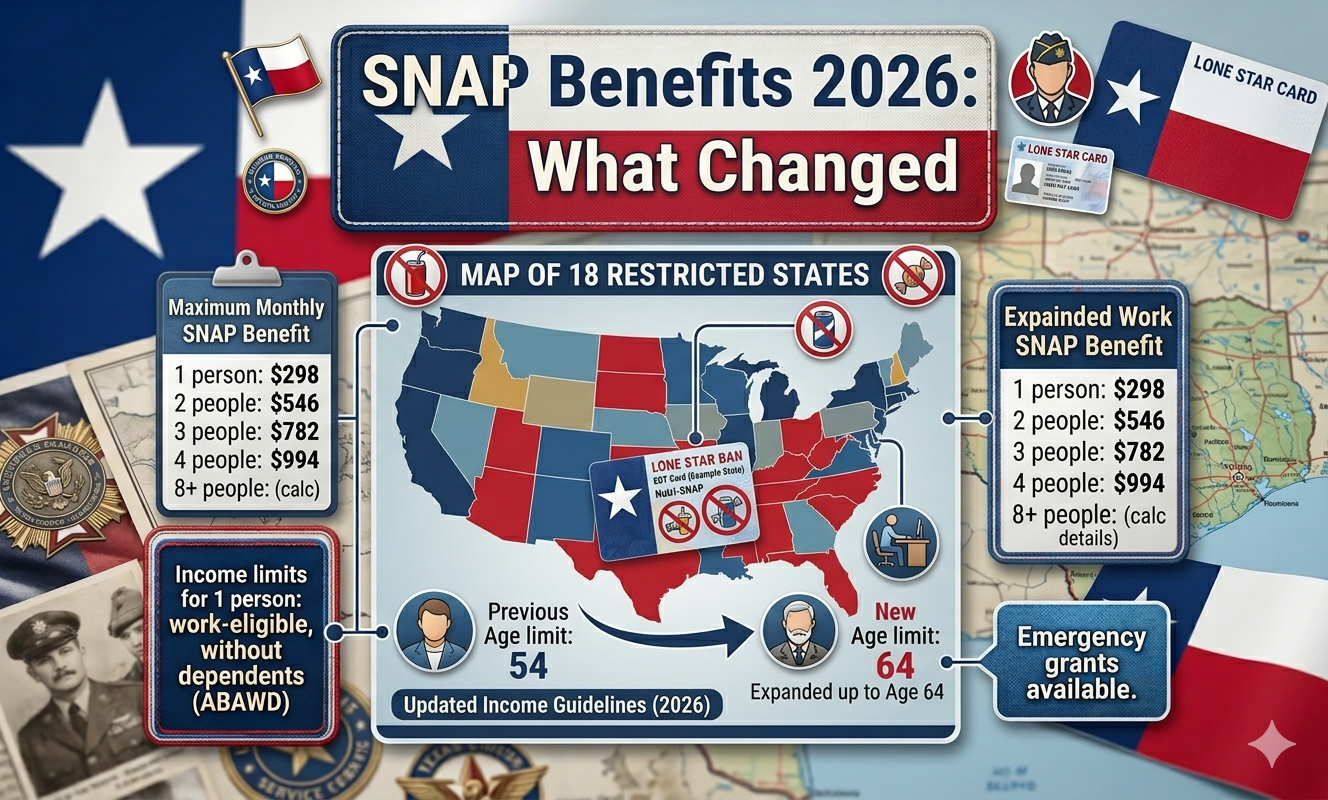
Old Rule: Exemptions for veterans, homeless individuals, and adults up to age 54.
New Rule: Veterans aged 18 to 64 must now meet the 80-hour monthly work/training threshold unless they have a disability or a child under 14 in the home .
The Consequence: If you fail to report your hours, you are capped at 3 months of benefits over a 3-year period .
2. The “Healthy SNAP” Grocery Restrictions
As of April 1, you cannot buy candy or any sweetened drink containing 5 grams or more of added sugar or artificial sweeteners .
Real life example: You can buy unsweet tea or sparkling water. You cannot buy Coke, Dr Pepper, or that Snickers bar with your Lone Star Card.
3. Payment Schedule is Unchanged
Benefits are still distributed on the 1st through the 15th of every month based on your Eligibility Determination Group (EDG) number .
Who Qualifies for SNAP in Texas Right Now?
Even with the stricter rules, many veterans still qualify. However, the income limits just got a slight adjustment for inflation.
The Financial Reality:
1 Person Household: Maximum monthly income of $2,152 (gross) .
4 Person Household: Maximum monthly income of $4,421 .
The Maximum Monthly Benefit (The amount on your card):
1 Person: $298
2 People: $546
4 People: $994
Are you exempt from the work rules? You are safe from the 80-hour rule if:
You have a physical or mental disability (verified by VA rating or doctor).
You are pregnant.
You have a child under 14 in the home.
You are over the age of 64 .
How to Apply or Keep Your Benefits (Action Steps)
Do not wait for a letter. The state expects you to be proactive.
Step 1: Report Your Status Immediately
If you are employed (even part-time), log into YourTexasBenefits.com and report your work hours immediately.
Step 2: Find “Work Activities”
If you are unemployed or underemployed, you must be in a work program. The simplest way to meet this is volunteering at a recognized nonprofit (like a food bank) for 20 hours a week.
Step 3: The “Veteran” Loophole (Use This)
While the SNAP exemption is gone, Vocational Rehabilitation & Employment (VR&E) counts as a qualifying work activity. If you are in a VA job training program, you are compliant.
The “Hidden” Emergency Funds: $46 Million for Texas Vets
Here is the news that isn’t being broadcast on TV. The Texas Veterans Commission (TVC) has just injected massive cash into the system to catch veterans who fall through the cracks of SNAP.
In the current funding cycle (July 2025 to August 2026), the TVC awarded $46.3 million in grants .
What this means for you: If you lose your SNAP benefits because you can’t meet the work requirements, you may qualify for emergency financial assistance for food and groceries through these grants. Organizations like Hope For The Warriors just received a $150,000 grant specifically to feed Texas families .
Call the Texas Veterans Commission at 1-800-252-VETS (8387). Tell them you are facing a food crisis due to the new SNAP work rules. They have discretionary funds specifically for this.
Common Mistakes Veterans Make (Warning)
I have seen too many veterans lose benefits because of these three avoidable errors:
1. Mistaking VA Disability for Automatic Approval
Just because you get VA disability pay doesn’t mean you are exempt from SNAP work rules. You need a doctor’s note stating you cannot work for medical reasons, or a VA rating for “Individual Unemployability (IU).”
2. Ignoring the “Volunteer” Clause
You do not have to have a paid job. You can volunteer at a church, the VFW, or a food bank. Get a signed log of your hours. If you don’t document it, the state assumes you didn’t do it.
3. Falling for Scams
No one from the government will call you asking for your Lone Star Card number to “reactivate” your benefits. Hang up. These scams spike whenever new laws pass .
What This Means Financially for Your Household
Let’s do the math for a disabled or unemployed veteran in San Antonio or Houston.
The Loss: Losing $298/month (the max for a single vet) means losing roughly 7 meals a week for the average person.
The Cost of Compliance: You have to prove 80 hours a month. That is about 18 hours a week.
The Strategy: Use your GI Bill or VRE. If you are a student, your attendance counts as “work activity.” If you are not a student, volunteer at your local USO or VA hospital. It keeps your benefits flowing and looks good on a resume.
Political Context: Why Did This Happen?
This is the result of the Fiscal Responsibility Act (passed in 2023) and the subsequent “One Big Beautiful Bill Act” of 2025/2026.
Politicians argued that too many able-bodied adults, including veterans, were on the rolls without working. The goal was to push people into the labor force. However, veteran advocates in Austin fought back hard, which is why the TVC pushed the $46 million grant fund—to act as a safety net while vets look for work .
Texas Specific: Unlike California or New York, Texas declined to use state funds to waive these federal work requirements. Texas is enforcing the federal rules to the letter.
Frequently Asked Questions (SEO FAQ)
Q: Is SNAP the same as the programa asistencial de nutrición suplementaria? A: Yes. That is the Spanish translation for the Supplemental Nutrition Assistance Program. In Texas, it is administered via the Lone Star Card.
Q: Does my VA disability count as income for SNAP? A: Yes. VA disability compensation counts as unearned income. It will lower the amount of SNAP you get, but it usually doesn’t disqualify you entirely unless your income exceeds $2,152/month for a single person.
Q: If I am homeless, am I exempt? A: No. As of 2026, homeless individuals are also not exempt from the work requirements . However, you can use SNAP to buy prepared meals at specific approved shelters and restaurants.
Q: What happens if I can’t find a job in Texas right now? A: You have to prove you are looking. Join a Workforce Solutions office in your county. Their case management counts as a “work activity.” If you refuse, you lose benefits in 3 months.
Final Takeaway
The days of simply holding a VA ID card and getting food stamps in Texas are over.
You have two choices:
Comply: Enroll in a work or volunteer program today to log your 80 hours. Keep your $300/month benefit.
Call for Backup: If you medically cannot work, get the documentation. If you are struggling, call the Texas Veterans Commission for the emergency grants.
The state is betting that veterans will adapt to the work rules. Prove them right—but use the safety net they gave you (the $46 million grant) to bridge the gap.
Understanding the New Work Requirements
The recent updates to the Supplemental Nutrition Assistance Program (SNAP) in Texas have introduced significant changes aimed at encouraging self-sufficiency among veterans. One of the most notable alterations is the enforcement of specific work requirements, which mandates that veterans must demonstrate proof of at least 80 hours of work or approved training per month. This provision is set to directly impact those veterans who are currently enrolled in the program and may lead to changes in their eligibility status.
The rationale behind these new work requirements is grounded in a broader effort to support veterans in achieving economic independence. By requiring proof of work or engagement in training, the state aims to reduce long-term reliance on assistance programs, while simultaneously equipping veterans with necessary skills for entering or re-entering the workforce. Advocates of this policy argue that by fostering consistent employment, veterans can better integrate into civilian life and achieve stable financial conditions.
Moreover, it’s essential for veterans to understand who exactly is affected by these changes. The new requirements will apply to most working-age veterans who receive SNAP benefits, although exemptions may exist for certain individuals, such as those with disabilities or caregivers with dependents. The implementation of these requirements not only seeks to motivate veterans to partake in productive activities but also aims to strengthen the overall economy by increasing workforce participation.
As Texas navigates these changes, it remains crucial for veterans to stay informed about their obligations and the potential impacts on their benefits. By understanding these new expectations, veterans can better prepare themselves to meet the compliance standards set forth by the SNAP program, ensuring they retain access to vital support as they transition to greater self-reliance.
Income Limits and Eligibility Criteria
Understanding the income limits and eligibility criteria for the Supplemental Nutrition Assistance Program (SNAP) is vital for veterans seeking assistance in Texas. As of April 2026, the income limits for SNAP benefits have been updated to reflect the current economic climate. To qualify for SNAP, veterans must have a household income that does not exceed 200% of the federal poverty level. This threshold is subject to adjustments based on household size and regional cost of living, which means that calculations may vary significantly by individual circumstances.
In addition to regular income, there are exceptions and special circumstances that can affect eligibility for veterans applying for SNAP. For instance, certain deductions may be available for veterans, such as medical expenses for individuals or families with significant ongoing healthcare needs. Moreover, veterans with disability compensation may have different eligibility considerations that are worth exploring.
The implementation of the new work requirements under the Supplemental Nutrition Assistance Program (SNAP) poses significant consequences for veterans who do not adhere to these regulations. Non-compliance can result in the loss of critical benefits, which may serve as a vital source of food assistance for many veteran households. It is essential for veterans to understand that failure to meet these work requirements could lead to immediate disqualification from the program, cutting off their access to food resources.
Veterans who find themselves non-compliant will typically receive a notification from the SNAP administration, outlining their current status and any necessary steps needed to regain their benefits. This notification process is vital; veterans are usually informed within a predefined time frame of their non-compliance status. Therefore, staying attentive to communications from SNAP is crucial to ensure timely assistance and to prevent any lapses in benefits.
In light of these changes, veterans should be proactive about the new requirements and act swiftly to rectify any issues that may cause non-compliance. The significance of maintaining compliance cannot be overstated, as it not only safeguards benefits but also ensures continuous support in accessing essential nutrition. With the stakes being high, veterans are encouraged to seek guidance from local SNAP offices or veteran service organizations. These channels can provide the necessary resources and information to remain compliant and avoid the unintended consequences of losing vital assistance.
Emergency Grants Available for Texas Veterans
The state of Texas has recently released emergency grants totaling nearly $50 million, aimed specifically at supporting veterans during a critical transitional period. These funds are designed to alleviate financial burdens faced by veterans as they navigate changes to their work rules and Supplemental Nutrition Assistance Program (SNAP) benefits. With these grants, eligible veterans can receive assistance to cover a variety of needs, ranging from housing to education and basic living expenses.
Eligibility for these emergency grants is primarily focused on veterans who have served in the armed forces and are currently facing financial hardships. This initiative seeks to ensure that veterans can access the necessary resources to stabilize their situations. The application process is streamlined to facilitate ease of access, allowing veterans to apply quickly and receive assistance in a timely manner.
Veterans interested in applying for these emergency grants can do so through the Texas Veterans Commission website, which provides comprehensive details on the application process. The application typically requires proof of military service, identification, and documentation of financial hardship. Grants can be utilized for various purposes, including assistance with rent, utilities, food, transportation, and education, among other essential services.
This initiative represents a significant commitment from the state to ensure that Texas veterans can recover and maintain a sustainable lifestyle amidst ongoing challenges. By providing financial assistance and resources, the state aims to empower veterans to transition successfully into stable employment and improve their overall quality of life.
Strategies to Meet New Work Requirements
With the introduction of new work requirements under the Supplemental Nutrition Assistance Program (SNAP) in Texas, it becomes crucial for veterans to align themselves with these changes to maintain their eligibility. Understanding the available resources and opportunities can significantly ease this transition for veterans. One effective strategy is to engage in job training programs offered through various organizations. These programs not only enhance employability by equipping veterans with essential skills but also provide valuable certifications that align with workforce demands. Veterans can explore programs facilitated by local community colleges and vocational institutions that prioritize military experience.
Additionally, volunteering presents a meaningful method for veterans to meet SNAP’s work requirements. Participating in volunteer activities can help build a network within the community while also presenting opportunities to gain hands-on experience in various fields. Numerous nonprofits in Texas actively seek out veterans for volunteer positions, which frequently lead to permanent employment. Engaging in such opportunities can enhance both professional and interpersonal skills, making veterans more competitive candidates in the job market.
Moreover, the Texas Workforce Commission offers a wealth of resources tailored to veterans, including career counseling and job placement services. These resources can assist veterans in identifying potential job openings, resume enhancement, and interview preparation. Furthermore, the Department of Veterans Affairs provides additional support services that can help veterans navigate the employment landscape effectively. It is beneficial for veterans to tap into these resources early on, ensuring that they meet the new work requirements efficiently.
In summary, veterans in Texas have various strategies available to remain compliant with the updated SNAP work requirements. By participating in job training, volunteering, and utilizing resources from experienced organizations, veterans can successfully navigate these challenges and secure stable employment.
Support Services for Texas Veterans
Veterans residing in Texas can access a variety of support services designed to assist them in adapting to the recent changes in work rules and the Supplemental Nutrition Assistance Program (SNAP). These organizations provide crucial resources, including assistance with employment, food security, and legal aid, ensuring that veterans are not left to navigate these challenges alone.
One key resource is the Texas Veterans Commission (TVC), which offers employment services tailored specifically for veterans. They provide job training, resume workshops, and job placement assistance. Interested veterans can reach TVC at 512-463-4800 or visit their website at www.tvc.texas.gov for more information on available programs.
For legal aid, the Texas Legal Services Center offers assistance with various legal issues that veterans might encounter, including those related to housing, benefits, and family law. They provide free legal consultations and can be contacted at 512-477-6000 or through their website at www.tlsc.org.
These organizations represent just a few of the support services available to Texas veterans, helping them successfully navigate the complexities introduced by recent rule changes and ensuring their needs are met in a timely manner.
Veterans’ Testimonials and Experiences
The recent changes to the Supplemental Nutrition Assistance Program (SNAP) have elicited diverse reactions among Texas veterans. These changes have not only altered the benefits distribution but have also shaped the narratives of many service members struggling to adapt. For instance, Veteran John Smith, a former Army sergeant, expressed profound concern regarding the new work requirements. “I have always worked hard to provide for my family, but these new regulations seem more punitive than supportive. I worry about meeting the necessary job search hours on top of my existing responsibilities,” he shared.
Similarly, Veteran Maria Gonzalez, who served in the Navy, highlighted the increased stress these changes have imposed on her daily life. “I am trying to juggle my part-time job while attending job training programs; it feels like an insurmountable task. Previously, the assistance from SNAP helped alleviate some financial pressure, but now, I feel like I am fighting an uphill battle,” she recounted. Maria’s experience resonates with many who feel overwhelmed by the added requirements amid their search for stable employment.
Not all narratives are steeped in despair, however. Veteran James Carter shared how he has sought community support to navigate these changes. “I reached out to local veterans’ organizations for guidance. Their advice helped me understand my options better, and I began networking with local businesses. While it’s challenging, I see it as an opportunity to learn and grow, although I still wish the system was more accommodating for those who served our country,” he emphasized.
These testimonials shed light on the real impact of the SNAP changes on Texas veterans, weaving a complex picture of their concerns, challenges, and the resilience they exhibit in the face of adversity. Each story adds depth to the understanding of how policy shifts affect those who have dedicated their lives to serving and protecting their country.
Conclusion and Call to Action
In conclusion, the recent updates concerning SNAP regulations have brought significant changes that Texas veterans must understand to effectively navigate their eligibility and benefits. The new work rules are designed to encourage self-sufficiency among beneficiaries while ensuring that those in need continue to receive vital food assistance. Therefore, it is crucial for veterans to familiarize themselves with these changes to avoid any disruption in their SNAP benefits.
Additionally, it is essential to emphasize the importance of seeking assistance when needed. Whether it be finding local support services, understanding application processes, or determining work requirements, veterans are encouraged to reach out to organizations and resources dedicated to helping them. These can include local food banks, non-profits, and government agencies that specialize in SNAP assistance.
Staying informed about SNAP requirements and potential changes can empower Texas veterans to take control of their food security and overall well-being. Regularly checking state resources, attending community meetings, and engaging with support networks can provide essential information and guidance to navigate these new rules effectively.
Ultimately, being proactive in understanding and complying with SNAP regulations is vital for accessing the assistance needed for sustainable food security. Texas veterans are urged to take these steps to ensure they remain eligible for the benefits they deserve, allowing them to focus on their recovery and overall quality of life.