What is a Food Stamp Card Number?

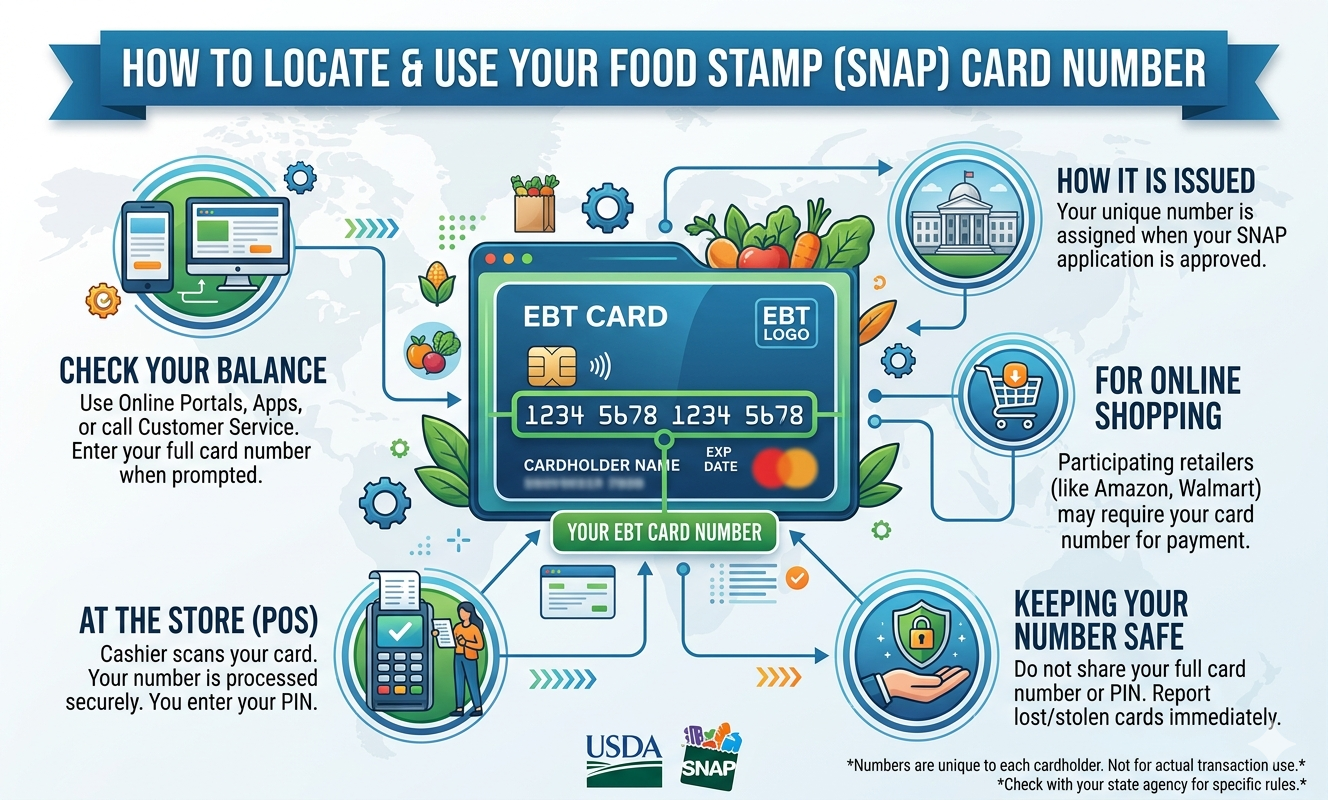
Food stamp card numbers, often referred to as EBT (Electronic Benefits Transfer) card numbers, are unique identifiers essential for individuals enrolled in government food assistance programs. Each EBT card typically comprises 16 digits, which serve various critical purposes in the management of benefits.
The significance of the food stamp card number lies in its role as a secure means of identifying an account. This number is integral to the operations of numerous programs designed to enhance food security for low-income households. When a recipient utilizes their EBT card to purchase eligible food items, the food stamp card number is used to process the transaction efficiently. This process provides a seamless experience for both recipients and merchants, ensuring transactions are completed swiftly.

Furthermore, the food stamp card number is linked to the benefits associated with the recipient’s account. This linkage ensures that the proper amount of assistance is allocated to eligible purchases, safeguarding the integrity of the program. Misuse or unauthorized access to this number can lead to significant issues, including the potential loss of benefits.It is crucial for EBT cardholders to protect their food stamp card number, as losing this information can lead to unauthorized transactions and ultimately affect their food assistance benefits.
Overall, the food stamp card number serves as a vital component in the implementation and administration of food assistance programs, enabling beneficiaries to access necessary resources while maintaining the security and accuracy of transactions.

The term “food stamp card number” usually refers to the 16-digit number on the front of your EBT card. Here is how it is used in each state and the important security updates for Alabama.
🎯 How Your Card Number is Used
You will need this number for several key actions, including checking your balance, activating a new card, or reporting a lost or stolen card.
- Maryland: You can check your balance by calling 1-800-997-2222 and entering your 16-digit EBT card number when prompted.
- Louisiana: You can check your balance through the LifeInCheck EBT mobile app or by calling 1-888-997-1117.
- Alabama: You will need your card number to activate your new chip-enabled card (see below) or to report it lost or stolen.
🚨 Critical Update for Alabama: Your New Chip-Enabled Card
If you live in Alabama, your EBT card has been or is being upgraded to a new, more secure chip-enabled card. These cards are being mailed to all Alabama EBT cardholders.
Here’s what you need to know:
- What’s new on the card: The design has changed. Your personal information is now on the back of the card. Additionally, the card now has an expiration date and a 3-digit security code (CVV) on the back, just like a credit or debit card.
- You must activate it: You must activate your new card within 180 days of receiving it. To do so, you will be asked to provide:
- Your 16-digit card number
- Your date of birth
- Your zip code
- The new 3-digit security code
- The new expiration date
- Out-of-state and online purchases are blocked by default: As a security measure, the new card is automatically set to block purchases made outside of Alabama or online. If you need to make these types of purchases, you must first unlock this feature using the ConnectEBT Mobile App, the ConnectEBT website, or by calling EBT Customer Service.
🔐 Security Tips for Your EBT Card
- Protect your PIN: Your Personal Identification Number (PIN) is the 4-number code you enter to make a purchase. It is the key to your benefits.
- Do not use easy-to-guess numbers like your birthdate, “1234”, or your card number.
- Do not share your PIN with anyone.
- Watch for skimmers: Be cautious when using your card at a payment terminal. Look for any loose or unusual parts that could be a “skimmer” device used to steal your card information. Always shield your hand when entering your PIN.
- If your benefits are stolen: Immediately report a lost or stolen card and any fraudulent charges to your state’s EBT customer service line. Prompt action is critical, as federal rules may limit your ability to get stolen benefits replaced.
How Food Stamp Card Numbers Are Used in Different States
Food stamp card numbers play a crucial role in the administration and utilization of supplemental nutrition programs across the United States. While the fundamental purpose of these identification numbers remains consistent—serving as a method for recipients to access their benefits—there are notable variations in their usage from state to state.
In many states, the food stamp card numbers are linked to account balances that recipients can use to purchase approved food items at authorized retailers. The process typically begins with the activation of the card, which involves the recipient calling a designated telephone number or visiting a state-operated website to set a personal identification number (PIN). This PIN is essential for ensuring secure transactions when making purchases.
In addition to basic functionalities, certain states have implemented unique regulations pertaining to their food stamp programs. For example, some states have introduced mobile applications, allowing cardholders to keep track of their benefits, transaction history, and even access educational resources about nutrition. States such as California and New York have advanced systems that utilize their respective food stamp card numbers to integrate with other social service programs, enhancing the overall user experience.
Moreover, states often have distinct policies regarding the eligibility criteria for food stamp benefits and the reloading of funds onto the card. Variations in procedures can stem from federal guidelines, yet they may reflect local economic conditions and demographic needs. Therefore, recipients are encouraged to familiarize themselves with the specific functions and regulations tied to their food stamp card numbers in their state, ensuring they maximize the benefits available to them.
Security Considerations for Food Stamp Card Numbers
Food stamp card numbers are essential for accessing benefits designed to assist individuals and families in need. Given their importance, safeguarding these numbers is paramount to ensuring the security of users’ benefits. One of the primary security concerns associated with food stamp cards is the risk of identity theft. Fraudsters may attempt to steal card numbers and other personal information to access benefits unlawfully, leading to financial losses for recipients.
Another significant issue is unauthorized usage of benefits. If a food stamp card falls into the wrong hands, it can be used to make fraudulent purchases, depleting the recipient’s resources. As such, it is crucial for individuals to take proactive measures to protect their food stamp card numbers.
To enhance security, recipients are advised to regularly monitor their transactions. By reviewing purchase history and account statements, individuals can quickly identify any suspicious activity that may require further investigation. Keeping personal information private and being cautious about sharing details can further reduce the risk of compromise. For instance, it is advisable to avoid discussing food stamp card details in public or unsecured environments.
If there is any indication of a compromised card number, it is vital to report the situation immediately. Many states have dedicated hotlines for recipients to contact in instances of card loss, theft, or fraudulent activity. Reporting such occurrences promptly not only helps in securing the card but also assists authorities in tracking and addressing fraudulent behavior in the system.
Ultimately, remaining vigilant and educated about security best practices is essential for anyone using a food stamp card. By adopting these precautions, recipients can significantly reduce their chances of falling victim to fraud and ensure that their benefits remain secure.
Important Security Updates for Alabama Residents
Alabama residents who utilize food stamp benefits should be aware of the recent security updates implemented to protect their Electronic Benefit Transfer (EBT) card numbers. As technology advances, the state has recognized the necessity for enhancing security measures to mitigate risks associated with fraudulent activities. These updates come in response to a growing concern over the safety of benefit recipients and aims to bolster the protection of sensitive financial information.
One significant update includes the introduction of enhanced verification processes before issuing or reloading EBT cards. This will require beneficiaries to provide additional identification methods, effectively ensuring that only authorized individuals have access to their benefits. Moreover, enhanced monitoring of transaction patterns has been initiated, which aids in detecting any unusual activities that may indicate fraud.
Additionally, Alabama has begun implementing multi-factor authentication protocols for users accessing their EBT accounts online. This extra layer of security necessitates more than just a password, such as a confirmation code sent to a registered mobile device. This measure is intended to prevent unauthorized access to personal accounts, reducing the risk of benefit theft.
Furthermore, the state has accelerated its outreach programs to educate beneficiaries about protecting their EBT card numbers. These initiatives include providing resources and training on recognizing phishing attempts and online scams that target EBT holders. Ensuring that recipients are well-informed about potential threats equips them to recognize suspicious activities and act accordingly.
It is paramount for Alabama residents to stay informed about these changes and adopt the suggested security practices to safeguard their food stamp benefits. By remaining vigilant and proactive, beneficiaries can help maintain the integrity of their accounts and ensure that their benefits remain secure.
🚨 FRAUD ALERT & OFFICIAL APPLICATION INFO
This site provides general guidance about U.S. federal and state benefit programs for educational and informational purposes only.
- ⚠️ Beware of Scams: Government benefits are ALWAYS FREE to apply for. No official agency (SSA, USDA, state benefits office, etc.) will ever ask for a credit card, gift card, payment, or fee to process your application. If someone asks for money, it is a scam.
- 🔒 Only Apply at .gov Sites: We are NOT an application portal. We do not process applications, collect personal data, or charge fees. To apply for benefits, always go directly to official .gov websites: SSA.gov, Benefits.gov, or your state's official benefits portal.
- No Affiliation: We are NOT affiliated with, endorsed by, or connected to the Social Security Administration (SSA), USDA, Centers for Medicare & Medicaid Services (CMS), or any other government agency.
- No Legal/Financial Advice: The information provided is for general guidance only and does not constitute legal, financial, or professional advice. Eligibility rules change frequently – always verify with official sources.
- No Data Collection: This site does not collect, store, or process any personal information. It has no login forms, contact forms, or any system to capture user data.
- Advertising: This site uses third-party advertising (Adsterra) to cover operational costs. We do not endorse or guarantee any products or services advertised.
📌 REMEMBER: The only way to apply for benefits is through official .GOV websites – and it is ALWAYS FREE.