Surprising Things You Can Buy With EBT in 2026: Complete Guide to SNAP-Eligible Items
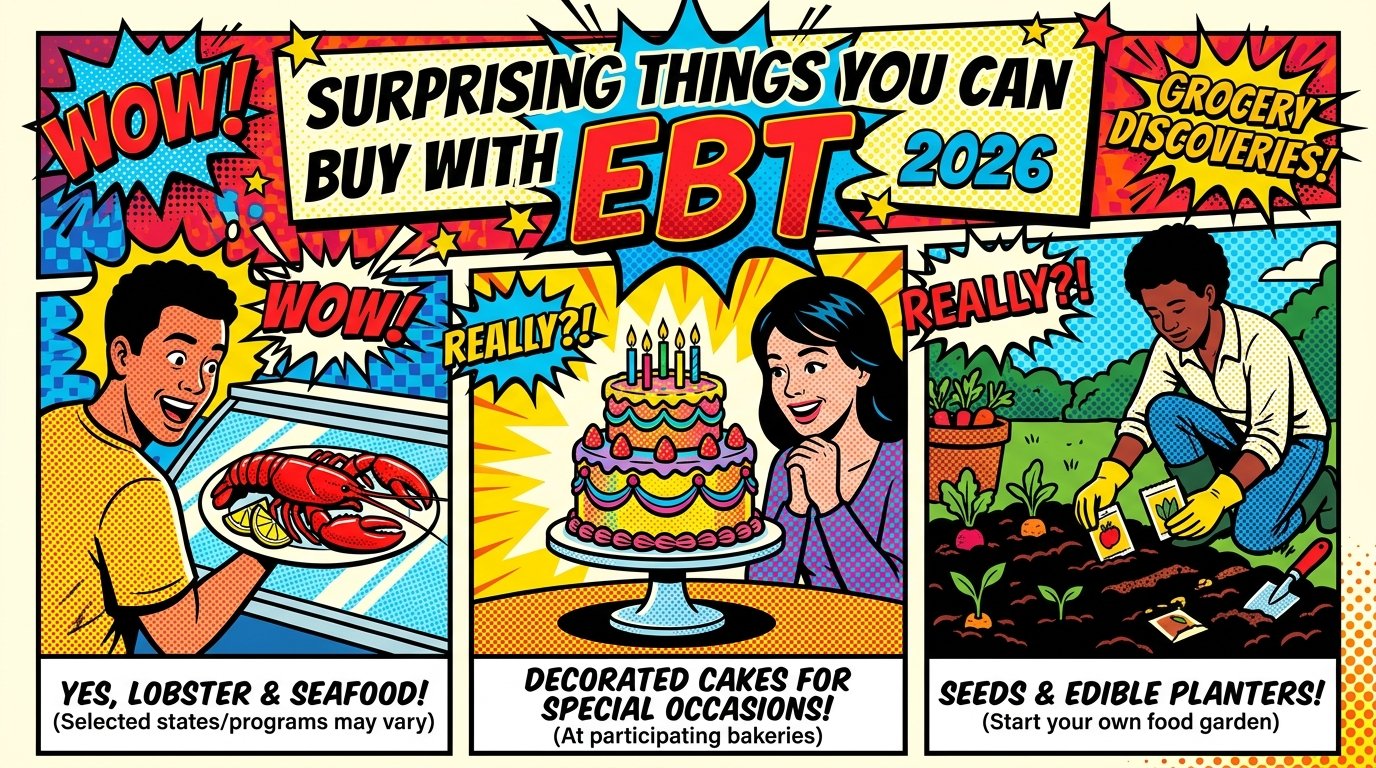
You can buy far more with EBT than most people realize. SNAP covers live lobster and shellfish, birthday cakes (if non-edible decorations are under 50% of the price), energy drinks with a Nutrition Facts label, vegetable seeds and food-producing plants, bottled water, ice, pumpkins, and gift baskets. You cannot buy hot prepared foods, alcohol, tobacco, vitamins, supplements, pet food, or non-food household items.
Online through state portals; by phone; in person; by mail
Processing Time
30 days standard; 7 days for expedited processing
Renewal
Recertification every 6–36 months; periodic reports required
Available States
All 50 states, Washington D.C., and U.S. territories
Last Updated
October 2026
What Is SNAP and How Does EBT Work?
SNAP is the federal food assistance program that provides monthly benefits on an Electronic Benefit Transfer (EBT) card to help low-income households buy food.
The Supplemental Nutrition Assistance Program is funded by the U.S. Department of Agriculture (USDA) and administered by state human services agencies. Benefits are loaded onto an EBT card that works like a debit card at authorized grocery stores, farmers markets, and some online retailers.
The key principle behind SNAP eligibility is simple: you can buy food for home consumption, but not prepared hot foods or non-food items. However, the definition of “food” is broader than many people realize — and it includes several categories that surprise even longtime recipients.
In February 2026, SNAP served approximately 42 million Americans. The program is designed to supplement, not replace, a household’s food budget.
What Can You Buy With SNAP?
You can buy any food or food product intended for home consumption, plus seeds and plants that produce food for your household.
SNAP benefits can be used to purchase:
Category
Examples
Fruits and vegetables
Fresh, frozen, canned, or dried
Meat, poultry, and fish
Beef, chicken, pork, turkey, fish, shellfish (see below)
Dairy products
Milk, cheese, yogurt, butter, eggs
Breads and cereals
Bread, rice, pasta, cereal, tortillas
Snack foods
Chips, pretzels, popcorn, cookies, candy*
Non-alcoholic beverages
Water, juice, soda, energy drinks*
Seeds and plants
Vegetable seeds, fruit trees, herb plants
Baby formula
All infant formula brands
Diabetic and diet foods
Specialized foods for medical conditions
Bakery items
Birthday cakes, pastries, muffins, donuts
20 Surprising Things You Can Buy With EBT
Many items that seem like they should be off-limits are actually SNAP-eligible. Here are 20 surprising purchases you can make with your EBT card.
1. Live Lobster and Shellfish
You can buy live lobster, crab, clams, mussels, and oysters with SNAP benefits. The USDA explicitly allows “shellfish and fish removed from water” as an exception to the live animal prohibition. Hot cooked lobster or fried shrimp from the deli counter is not eligible, but live lobster from the seafood counter is.
2. Birthday and Wedding Cakes
Birthday cakes, wedding cakes, cupcakes, and other special occasion cakes are SNAP-eligible at any authorized retailer. The one rule: the value of non-edible decorations (plastic figurines, toys, etc.) cannot exceed 50% of the total purchase price.
3. Energy Drinks (With a Nutrition Facts Label)
Energy drinks like Monster and Red Bull are SNAP-eligible if they have a Nutrition Facts label. Energy drinks with a Supplement Facts label (like 5-Hour Energy shots) are not eligible. However, several states have restricted or intend to restrict energy drinks from SNAP purchases in 2026.
4. Vegetable Seeds and Food-Producing Plants
You can buy tomato seeds, pepper plants, fruit trees, berry bushes, herb seeds, and seed potatoes with SNAP benefits. This is one of the most powerful — and underused — features of the program. A $2 packet of seeds can produce hundreds of dollars worth of food.
5. Bottled Water and Ice
Bottled water and ice for human consumption are SNAP-eligible. You can buy cases of water, gallon jugs, and bags of ice at any authorized retailer.
Whole pumpkins are SNAP-eligible because they are a food-producing plant. You can buy pumpkins to carve, to cook, or to use as decoration — as long as you intend to use them as food. Pumpkin seeds are also eligible.
7. Gift Baskets
Pre-made gift baskets that contain food items are SNAP-eligible, provided the value of the non-food items (the basket itself, ribbon, etc.) is less than 50% of the total purchase price. This is the same rule that applies to birthday cakes.
8. Steaks and Premium Cuts of Meat
You can buy ribeye steaks, filet mignon, lamb chops, and any other cut of meat with SNAP benefits. There is no restriction on the type or quality of meat you can purchase.
9. Kombucha and Water Kefir
These fermented beverages are SNAP-eligible because they are considered food and have Nutrition Facts labels.
10. Olive Oil, Honey, and Maple Syrup
These accessory foods are fully SNAP-eligible. You can buy extra virgin olive oil, raw honey, pure maple syrup, and any other condiment, seasoning, or sweetener.
11. Coffee Beans and Ground Coffee
You can buy coffee beans, ground coffee, and instant coffee with SNAP benefits. You just can’t buy a hot cup of coffee from the store’s coffee bar.
12. Hummus, Salsa, and Dips
These prepared but cold food items are SNAP-eligible. You can buy hummus, salsa, guacamole, and other refrigerated dips.
13. Artisanal Bread and Pastries
Farmers market bread, croissants, bagels, muffins, and pastries are all SNAP-eligible. You can also use SNAP at some farmers markets for fresh-baked goods that are wrapped and cold.
14. Edible Flowers and Herbs
Edible flowers like squash blossoms and herb plants like basil, cilantro, and mint are SNAP-eligible. You can buy a basil plant and use it for months of fresh herbs.
15. Snow Crab Legs and King Crab
Like lobster, snow crab legs, king crab, and Dungeness crab are SNAP-eligible. They are shellfish and therefore fall under the exception to the live animal prohibition.
16. Cakes from the Bakery Counter
Custom cakes ordered from the bakery counter are SNAP-eligible. The key is that the cake must be cold or at room temperature when you buy it — not hot from the oven.
17. Diet and Zero-Calorie Drinks
Diet soda, zero-calorie energy drinks, and other low-calorie beverages with Nutrition Facts labels are SNAP-eligible in most states. However, some states with soda restrictions may exclude these too.
18. Specialty Cheeses
Brie, gouda, aged cheddar, artisan goat cheese, and any other cheese are SNAP-eligible. There is no restriction on cheese type or price.
19. Fermented Foods
Kimchi, sauerkraut, miso, tempeh, and other fermented foods are SNAP-eligible because they are food products for home consumption.
20. Food-Producing Trees and Bushes
You can buy apple trees, blueberry bushes, raspberry canes, and other food-producing plants with SNAP benefits. These are considered “plants that produce food for the household.”
What You Cannot Buy With SNAP
The USDA maintains a clear list of prohibited items. Here is what your EBT card will not cover.
Prohibited Category
Examples
Alcohol
Beer, wine, liquor, cannabis beverages
Tobacco
Cigarettes, cigars, vaping products
Hot prepared foods
Rotisserie chicken, hot pizza, hot soup, hot coffee
Food eaten in store
Any food consumed on premises
Vitamins and supplements
Any product with a Supplement Facts label
Medicines
Over-the-counter and prescription
Pet food
Dog food, cat food, bird seed, aquarium fish food
Non-food household items
Paper products, soap, cleaning supplies, diapers
Grooming and cosmetic items
Shampoo, toothpaste, makeup
Live animals
Except shellfish and fish removed from water
Cannabis/CBD
Any food or drink containing controlled substances
The Supplement Facts Label Rule: Any item with a Supplement Facts label is considered a supplement and is not SNAP-eligible. This includes vitamins, many energy drinks, protein powders, and meal replacement shakes.
State-by-State Restrictions in 2026
Several states have received USDA waivers to restrict SNAP purchases of soda, candy, and energy drinks. The rules vary significantly by state.
As of March 2026, 22 states have received USDA waivers to restrict non-nutritious foods and beverages from SNAP purchases. This is a rapidly changing area, and rules that are in effect one month may be vacated by a court ruling the next.
States With Active SNAP Restrictions (2026)
State
Restricted Items
Effective Date
Texas
Candy, sweetened drinks
April 1, 2026
Idaho
Candy, soda
February 15, 2026
Arkansas
Candy, soda, drinks <50% juice
July 1, 2026
Louisiana
Soft drinks, energy drinks, candy
February 18, 2026
Indiana
Sugary drinks, candy
January 1, 2026
Florida
Soda, certain sugary snacks
April 2026
Kansas
Candy, soda
February 15, 2027
States Where Restrictions Were Vacated
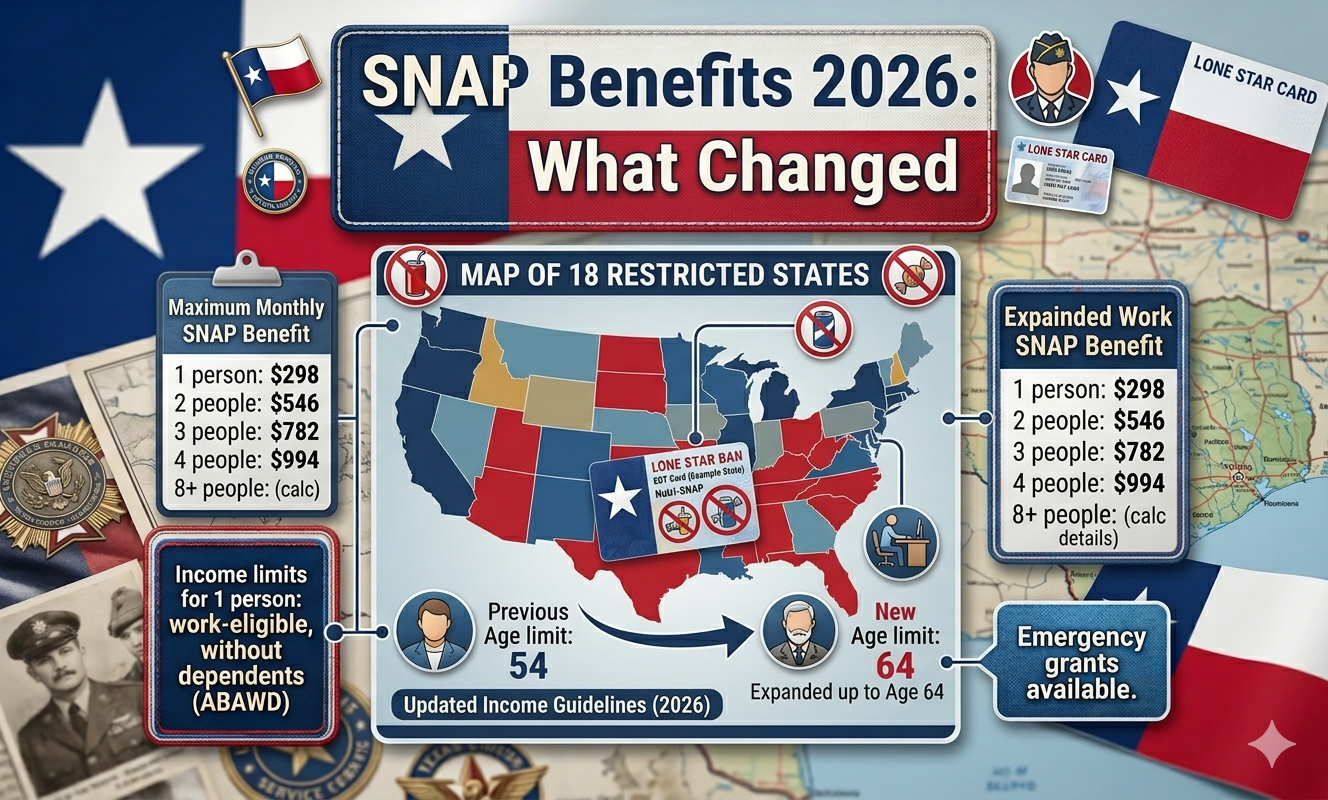
A federal judge blocked SNAP purchase restrictions in five states (Colorado, Iowa, and others), making soda, energy drinks, and candy EBT-eligible again in those states. Eighteen other states kept their approved bans in place.
What this means for you: If you live in a state with active restrictions, your EBT card will not work for soda, candy, or energy drinks at checkout. The specific list of banned products varies by location. If you live in a state where restrictions were vacated, those items are eligible again.
What About Birthday Cakes and Energy Drinks?
Birthday cakes remain SNAP-eligible even in states with dessert restrictions, as long as the non-edible decoration rule is met. Energy drinks are more complicated — some states ban them outright, while others allow energy drinks with Nutrition Facts labels but ban those with Supplement Facts labels.
Who Qualifies for SNAP?
You may qualify for SNAP if your household meets income limits, resource limits, and work requirements.
Who Qualifies
Category
Requirements
Income
Gross monthly income at or below 130% FPL (federal) or up to 200% FPL in BBCE states
Resources
Countable resources below $2,750 (or $4,250 if a member is 60+ or disabled); waived for BBCE households
Citizenship
U.S. citizens and qualified immigrants
Work requirements
ABAWDs ages 18–64 must work or participate in qualifying activities 80 hours/month
Students
Most college students must work 20 hours/week, have work-study, or meet another exemption
Who Does NOT Qualify
Households with gross income above program limits
Undocumented immigrants
Most able-bodied college students enrolled at least half-time (unless they meet an exemption)
ABAWDs who fail to meet the 80-hour monthly work requirement without an exemption
Most striking workers
Common Exceptions
Seniors (60+) and people with disabilities are exempt from ABAWD work requirements and have higher resource limits
Pregnant women are exempt from ABAWD requirements
Veterans may qualify for exemptions
People experiencing homelessness may qualify for expedited processing
Income Examples
A single person earning $1,900/month gross may qualify under BBCE
A family of four earning $5,200/month gross may qualify under BBCE
A family of four earning $5,600/month gross would not qualify under BBCE
Asset limits apply to SNAP unless your household is categorically eligible through BBCE.
Household Type
Resource Limit
No member 60+ or disabled
$2,750
Member 60+ or disabled
$4,250
BBCE-eligible households
No asset limit
What counts as a resource: Cash, bank accounts, stocks, bonds, mutual funds, vehicle equity above $4,650.
What does NOT count: Primary residence, retirement accounts (if inaccessible), educational accounts, one vehicle per adult (up to $4,650 equity).
Household Requirements
Your SNAP household includes everyone who lives together and purchases and prepares food together.
Person
Counted in Household?
Yourself
Yes
Spouse
Yes
Children under 22 living with parents
Yes
Other relatives who purchase/prepare food together
Yes
Roommates who purchase/prepare food together
Yes
Roommates who purchase/prepare separately
Generally no
Special rules:
Students: Most able-bodied students ages 18–49 enrolled at least half-time in college are not eligible unless they meet an exemption
Seniors and people with disabilities: May have separate household status if they cannot purchase and prepare food with others
Spouses: Must be in the same household regardless of purchase/prepare arrangements
Citizenship and Immigration Rules
You must be a U.S. citizen or qualified immigrant to receive SNAP benefits.
Status
SNAP Eligibility
U.S. citizen
Eligible
Lawful permanent resident (5+ years)
Eligible
Lawful permanent resident (<5 years)
Generally ineligible
Refugee/Asylee
Eligible immediately
Cuban/Haitian entrant
Eligible
COFA resident
Eligible
DACA recipient
Ineligible
Undocumented
Ineligible
Mixed-status families: Eligible family members can receive SNAP even if other members are ineligible. For example, a U.S. citizen child can receive SNAP even if their undocumented parent cannot.
Required Documents
You will need specific documents to apply for SNAP.
Document Category
Examples
Identity
Driver’s license, state ID, passport
Social Security Number
SSN for all household members applying
Citizenship/Immigration
Birth certificate, passport, green card
Income
Pay stubs (last 30 days), employer letter
Resources
Bank statements (if asset test applies)
Rent/Mortgage
Lease, rent receipt, mortgage statement
Utility Bills
Electric, gas, water, heating bills
Childcare Costs
Provider statements or receipts
Medical Expenses
Bills for household members 60+ or disabled
How to Apply
You can apply for SNAP online, by phone, by mail, or in person.
Step 1: Check eligibility. Use the prescreening tool at Benefits.gov.
Step 2: Gather documents. Collect identification, income, and expense documents.
Step 3: Submit your application. Apply online through your state’s portal, by phone, by mail, or in person.
Step 4: Complete an interview. After submitting your application, you must complete an eligibility interview.
Step 5: Receive a decision. You will receive a written decision within 30 days.
Step 6: Receive your EBT card. If approved, you will receive an EBT card in the mail.
Step 7: Recertify when required. You must recertify before your certification period ends.
Processing Time
Standard SNAP applications are processed within 30 days. Expedited applications are processed within 7 days.
Processing Type
Timeframe
Who Qualifies
Standard
30 days
Most applicants
Expedited
7 days
Households with very low income or high expenses
Who qualifies for expedited processing:
Households with gross monthly income less than $150 and liquid resources less than $100
Households with gross income plus liquid resources less than monthly rent plus utilities
Households experiencing homelessness
Migrant or seasonal farm workers with very low income
Payment Schedule
SNAP benefits are loaded onto your EBT card monthly, generally over the first 9–14 days of the month.
Benefits are spread over several days based on your case number or the last digit of your Social Security number, depending on your state.
State
Issuance Schedule
New York
First 9 days of month (based on case number)
California
First 10 days of month (based on case number)
Texas
First 10 days of month (based on EDG number)
Florida
First 14 days of month (based on case number)
Payment method: Benefits are loaded onto your EBT card and can be used at authorized retailers. You can also use your EBT card for online grocery purchases at participating retailers including Amazon, Walmart, and Instacart.
Renewal Process
You must recertify before your certification period ends to continue receiving SNAP benefits.
Certification periods:
Household Type
Certification Period
Most households
12 months
Households with all members 60+ or disabled
Up to 24 months
Some households
Up to 36 months
Recertification process:
Receive your recertification notice
Complete the recertification application
Complete an interview
Submit required documents
Receive a decision
Reasons Applications Are Denied
The most common reasons for SNAP denial are income above limits, failure to complete the interview, and missing documents.
Reason
Explanation
Income above limit
Gross income exceeds 200% FPL (or 130% if not BBCE eligible)
Net income above limit
Income after deductions exceeds 100% FPL
Resources above limit
Resources exceed $2,750 (or $4,250 for 60+/disabled)
Failure to complete interview
Did not complete the required eligibility interview
Missing documents
Did not provide required verification
Immigration status
Not a U.S. citizen or qualified immigrant
ABAWD non-compliance
Failed to meet 80-hour monthly work requirement
Appeals Process
If your SNAP application is denied or your benefits are reduced or terminated, you have the right to appeal.
Request a fair hearing — Online, by phone, or by mail
Deadline — Within 90 days of the notice date (10 days for continued benefits)
Prepare for the hearing — Gather documents and evidence
Attend the hearing — Conducted by phone or in person
Receive a decision — Written decision issued after the hearing
Common Mistakes
Avoid these common mistakes to protect your SNAP benefits:
Assuming you make too much — BBCE allows income up to 200% FPL in many states
Not reporting changes — Report income, household, and address changes within 10 days
Missing recertification deadlines — Mark your calendar and complete recertification on time
Not completing the interview — The interview is required
Not checking your EBT balance — Know how much you have before shopping
Sharing your PIN — Never share your EBT card or PIN with anyone
Not reporting a lost or stolen card — Report immediately to prevent unauthorized use
Not appealing a denial — You have the right to appeal
Benefit increase (October 1, 2025): Maximum SNAP benefit amounts increased for FY2026. A family of four can now receive up to $994/month.
State SNAP restrictions: 22 states have received USDA waivers to restrict soda, candy, and energy drinks from SNAP purchases as of March 2026.
ABAWD work requirements expanded: The age range for ABAWDs expanded from 18–54 to 18–64. The childcare exemption narrowed to children under 14.
Summer EBT: $120 per eligible child issued in most states beginning June 2026.
Frequently Asked Questions
Can you buy live lobster with EBT?
Yes. Live lobster, crab, clams, mussels, and oysters are SNAP-eligible. Shellfish and fish removed from water are the exception to the live animal prohibition. Hot cooked lobster from the deli is not eligible.
Can you buy a birthday cake with EBT?
Yes. Birthday cakes, wedding cakes, and cupcakes are SNAP-eligible. The one rule: the value of non-edible decorations (plastic figurines, toys) cannot exceed 50% of the purchase price.
Can you buy energy drinks with EBT?
It depends on the label. Energy drinks with a Nutrition Facts label (like Monster) are eligible in most states. Energy drinks with a Supplement Facts label (like 5-Hour Energy) are not eligible. Several states have banned energy drinks from SNAP purchases entirely.
Can you buy seeds and plants with EBT?
Yes. Vegetable seeds, fruit trees, berry bushes, herb plants, and seed potatoes are all SNAP-eligible. This is one of the most underused features of the program — a small investment in seeds can produce months of food.
Can you buy vitamins with EBT?
No. Vitamins, medicines, and supplements are not SNAP-eligible. Any product with a Supplement Facts label is prohibited.
Can you buy pet food with EBT?
No. Pet food is not SNAP-eligible. Your EBT card will not work for dog food, cat food, bird seed, or aquarium fish food.
Can you buy hot food with EBT?
No. Hot prepared foods are not SNAP-eligible. You cannot buy a rotisserie chicken, hot pizza, hot soup, or a hot cup of coffee. However, you can buy cold prepared foods that you heat at home.
Can you buy bottled water with EBT?
Yes. Bottled water and ice for human consumption are SNAP-eligible.
Can you buy gift baskets with EBT?
Yes, if the value of the non-food items (the basket, ribbon, etc.) is less than 50% of the total purchase price.
Can you buy pumpkin with EBT?
Yes. Whole pumpkins are SNAP-eligible because they are a food-producing plant. You can buy pumpkins to cook, to carve, or for decoration.
Can you buy steak with EBT?
Yes. You can buy ribeye steaks, filet mignon, and any other cut of meat with SNAP benefits. There is no restriction on the type or quality of meat you can purchase.
Can you buy coffee with EBT?
Yes. You can buy coffee beans, ground coffee, and instant coffee. You cannot buy a hot cup of coffee from the store’s coffee bar.
What states have banned soda and candy from SNAP?
As of 2026, 22 states have received USDA waivers to restrict soda, candy, and energy drinks from SNAP purchases. Active restrictions are in place in Texas, Idaho, Arkansas, Louisiana, Indiana, Florida, and Kansas, among others.
Can you use EBT at farmers markets?
Yes. Many farmers markets accept EBT and some offer “Market Match” programs that double your SNAP dollars for fruits and vegetables. You can buy fresh produce, baked goods, honey, jams, and food-producing plants at participating markets.
Key Takeaways
SNAP covers far more than basic groceries — including live lobster, birthday cakes, energy drinks, seeds, and plants
The key rule is simple: food for home consumption is eligible; hot prepared foods and non-food items are not
20 surprising items you can buy: live lobster, birthday cakes, energy drinks (with Nutrition Facts labels), vegetable seeds, bottled water, pumpkins, gift baskets, steaks, kombucha, olive oil, coffee beans, hummus, artisanal bread, edible herbs, snow crab, custom cakes, diet drinks, specialty cheese, fermented foods, and fruit trees
What you cannot buy: alcohol, tobacco, hot prepared foods, vitamins, supplements, pet food, non-food household items, and cannabis/CBD
22 states have restricted soda, candy, and energy drinks from SNAP purchases as of March 2026
The 50% rule applies to cakes and gift baskets — non-edible decorations and packaging must be less than half the purchase price
Supplement Facts label = not eligible — this is the key distinction for energy drinks, protein powders, and vitamins
Seeds and plants are a powerful but underused benefit — a $2 seed packet can produce hundreds of dollars in food
SNAP income limits are up to 200% FPL in BBCE states — many working families qualify
Eligible immigrants and mixed-status families can receive SNAP benefits