The Maryland SNAP (Supplemental Nutrition Assistance Program) serves as a vital resource for low-income individuals and families, aimed at alleviating food insecurity across the state. This federal assistance program, administered by the Maryland Department of Human Services, provides eligible participants with financial aid to purchase essential food items. By supporting nutritional needs, the program plays an essential role in promoting public health and overall well-being among economically disadvantaged groups.
SNAP is designed to assist not only the unemployed but also those who are working but struggling to make ends meet. The initiative addresses the fundamental necessity for food, helping families stretch their budgets and ensure a balanced diet. As a means-tested program, eligibility for Maryland SNAP is based on household income, composition, and expenses. This careful assessment aims to allocate resources effectively to those in greatest need, thus strengthening community support systems.
Here is the most current information on Maryland SNAP (Food Stamps), including recent changes to work requirements that took effect in 2026.
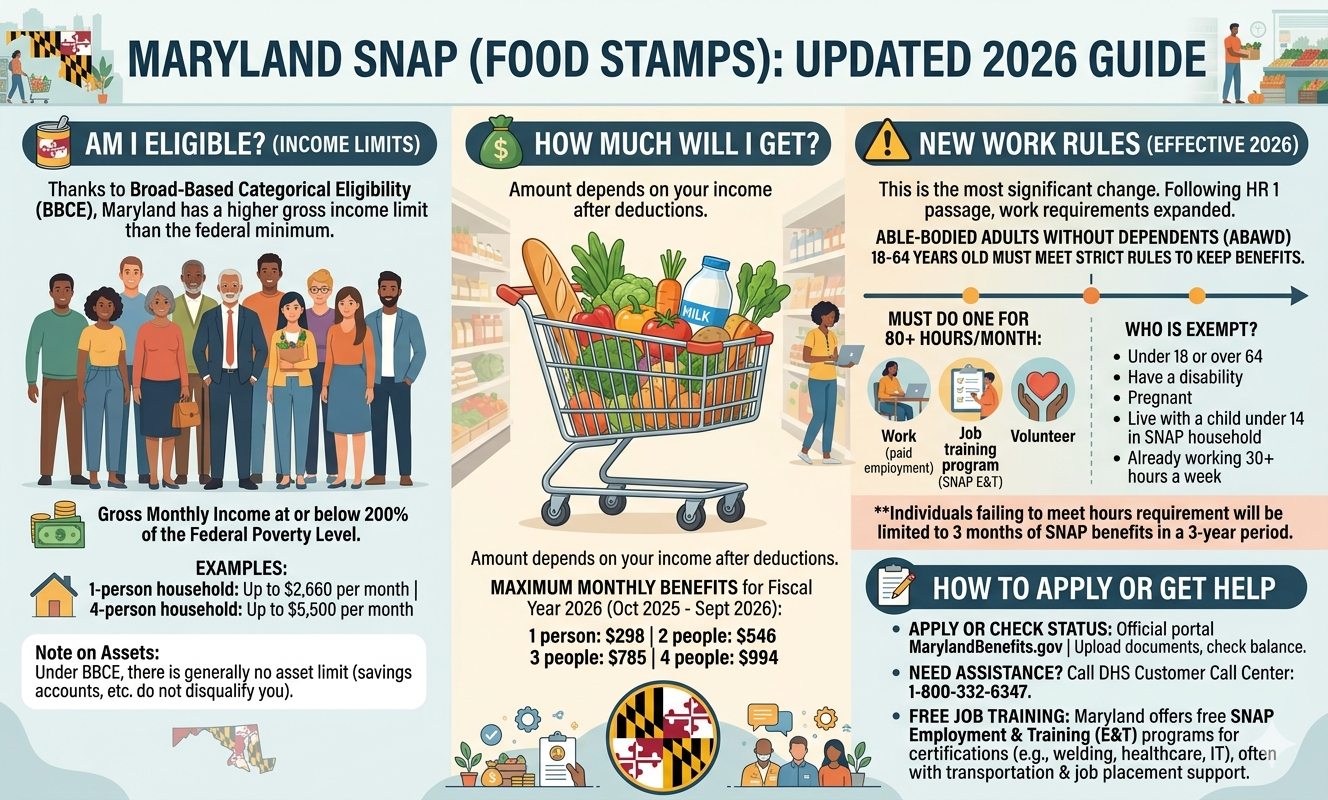
You generally qualify if your gross monthly income is at or below 200% of the Federal Poverty Level. For example:
1-person household: Up to $2,660 per month
4-person household: Up to $5,500 per month
Note on Assets: Under BBCE, there is generally no asset limit (savings accounts, etc. do not disqualify you) .
💰 How Much Will I Get?
The amount depends on your income after deductions, but these are the maximum monthly benefits for the 2026 fiscal year (Oct 2025 – Sept 2026):
1 person: $298
2 people: $546
3 people: $785
4 people: $994
⚠️ New Work Rules (Effective 2026)
This is the most significant change. Following the passage of HR 1, work requirements have been expanded. If you are an “Able-Bodied Adult Without Dependents” (ABAWD) between 18 and 64 years old, you must now meet strict rules to keep benefits .
You must do one of the following for at least 80 hours per month:
Work (paid employment)
Participate in a job training program (SNAP E&T)
Volunteer
Who is Exempt? You are exempt from these requirements if you:
Are under 18 or over 64
Have a disability
Are pregnant
Live with a child under 14 in your SNAP household
Are already working 30+ hours a week
Important: Individuals who do not meet an exemption and fail to meet the hours requirement will be limited to 3 months of SNAP benefits in a 3-year period .
📝 How to Apply or Get Help
Apply or Check Status: The official portal is MarylandBenefits.gov. You can apply, upload documents, or check your balance there .
Need Assistance? Call the DHS Customer Call Center at 1-800-332-6347 .
Free Job Training: If you need help meeting the work requirement, Maryland offers free SNAP Employment & Training (E&T) programs. These include welding, healthcare, IT, and other certifications, often with transportation and job placement support .
Are you applying for yourself or helping a family member? Let me know if you’d like me to help calculate the exact benefit amount for your household size.
Firstly, income limits play a crucial role in determining eligibility. Generally, households must have a gross monthly income that is at or below 200% of the federal poverty level (FPL). For instance, as of 2023, the FPL for a single-person household is $1,215, meaning that the gross monthly income limit for this household size would be approximately $2,430. As family size increases, the income limits are adjusted accordingly. It is important for applicants to provide accurate documentation of their income, including wages, benefits, and any additional sources of support.
Secondly, household composition is an essential consideration in the eligibility process. A household consists of individuals who live together and share meals or financial resources. This can include families, roommates, or other arrangements. When assessing eligibility, the income of all household members is considered, but some deductions, such as childcare costs, may be applied to calculate net income. Additionally, certain exemptions exist for specific groups, including elderly or disabled individuals, which may further affect income evaluation.
Furthermore, applicants must be U.S. citizens or qualified non-citizens, and they must reside in Maryland. Other factors, such as work requirements for able-bodied adults without dependents, also influence eligibility. Each case is reviewed individually, and applicants are encouraged to consult the Maryland Department of Human Services for complete guidance on submitting applications and fulfilling eligibility requirements. By ensuring that they meet the necessary criteria, individuals and families can effectively access vital SNAP benefits to aid in their nutritional needs.
Benefits Offered Through SNAP
The Supplemental Nutrition Assistance Program (SNAP) in Maryland serves as a critical resource for individuals and families in need of food assistance. One of the primary benefits provided through SNAP is monetary assistance specifically allocated for purchasing nutritious food. This assistance enables low-income households to obtain essential food items, helping them maintain a balanced diet that is vital for health and wellbeing.
Recipients of SNAP benefits receive an Electronic Benefits Transfer (EBT) card, which functions like a debit card, allowing them to shop for food at authorized retailers. This system not only increases access to various food options but also empowers recipients in their shopping decisions. Moreover, the program covers a wide array of food products, including fruits, vegetables, dairy, meats, bread, and cereals, thereby expanding dietary choices and fostering better nutrition.
In addition to direct monetary assistance, Maryland SNAP also offers supplementary resources to further support food security among its participants. For example, the program often collaborates with local food banks and community organizations, providing information on additional food resources, nutrition education, and cooking classes. These initiatives aim to educate recipients about healthy eating habits and effective food budgeting techniques, promoting long-term food security.
Furthermore, SNAP initiatives may include outreach programs targeting vulnerable populations such as seniors, families with children, and individuals with disabilities to ensure they are informed about available resources. By connecting individuals with relevant services and support, Maryland SNAP addresses not only the immediate need for food assistance but also contributes to the broader goal of improving public health and community resilience.
Recent Changes to Work Requirements
Recent legislative changes to the Supplemental Nutrition Assistance Program (SNAP) in Maryland indicate a significant transformation in work requirements, with these adjustments set to take effect in 2026. These new requirements aim to enhance workforce participation among SNAP recipients, reflecting broader economic conditions and the need for workforce development.
The revised work requirements mandate that able-bodied adults without dependents (ABAWDs) will need to engage in qualified work or training activities for a minimum of 20 hours per week. This will include options such as employment, volunteer work, or participation in educational programs accredited by recognized institutions. The rationale behind these changes is to encourage self-sufficiency, reduce dependency on government assistance, and strengthen the overall economy by integrating more individuals into the labor market.
The impacts of these changes are anticipated to be substantial. Current participants may face challenges in meeting these new conditions, resulting in potential loss of SNAP benefits. Additionally, there is concern regarding the availability of sufficient job opportunities and training programs to accommodate those required to fulfill the new criteria. For future participants, these changes imply that securing employment or participating in relevant training will be essential to maintain their eligibility for food assistance.
This shift in SNAP work requirements underscores an evolving approach to welfare programs, where the emphasis is placed not only on assistance but also on fostering a capable workforce. Understanding these impending regulations is critical for individuals relying on SNAP, as they will need to prepare for the new work expectations associated with the program.
Impact of Work Requirement Changes on Recipients
The recent modifications to the work requirements associated with the Supplemental Nutrition Assistance Program (SNAP) in Maryland have introduced significant implications for recipients. As the state has enacted stricter criteria, many low-income families may face heightened challenges in maintaining their benefits. The revised policies stipulate that recipients between 18 and 49 years old must participate in work-related activities for a minimum of 80 hours per month to avoid losing access to essential nutritional assistance.
For many individuals within this demographic, the mandated work requirement can pose considerable obstacles. A lack of available employment opportunities, along with barriers such as transportation issues, childcare responsibilities, and health complications, can hinder recipients from fulfilling the new obligations. Moreover, individuals living in rural areas may encounter longer commutes or limited access to job openings, further complicating their ability to meet these requirements.
The socioeconomic implications of these changes extend beyond the immediate challenges faced by individuals. Families who struggle to comply with the work requirements risk losing their SNAP benefits, which could lead to food insecurity and increased poverty levels. The affected households might experience heightened stress, as the reliance on benefits often forms a critical component of their overall economic stability. As food prices continue to rise, the repercussions of losing assistance can severely impact not only the physical health of recipients but also their mental well-being and ability to thrive in their communities.
As the changes to work requirements unfold, it is essential to acknowledge the broader impacts on Low-Income families in Maryland. Adapting to these requirements may require additional support systems, such as job training programs and accessible childcare solutions, to ensure that individuals can meet their obligations while maintaining their nutritional needs. Without these concerted efforts, the potential for increased hardship among vulnerable populations remains a pressing concern.
Community Response to Changes in SNAP
The recent implementation of new work requirements within Maryland’s Supplemental Nutrition Assistance Program (SNAP) has elicited a varied response from local community organizations, advocacy groups, and the general public. Many stakeholders have expressed concerns regarding the potential impacts of these changes on vulnerable populations. Local food banks and service organizations are poised to see an increase in demand for assistance, prompting them to strengthen their support systems in order to accommodate those affected by the new regulations.
Advocacy groups have rallied to raise awareness about the potential negative consequences of the increased work requirements, emphasizing that many low-income residents may face barriers in meeting the newly established criteria. These barriers include child care responsibilities, transportation issues, and the ongoing effects of the COVID-19 pandemic, which continue to challenge individuals seeking employment. In response, various community partners are developing programs aimed at providing resources, such as job training and resume workshops, to help those impacted transition into the workforce more effectively.
Furthermore, public forums have been organized by non-profit organizations to facilitate discussions between policy-makers, community leaders, and the residents who will be directly affected by these changes. These forums serve as vital platforms for expressing concerns and advocating for solutions, while also offering valuable insights on how to navigate the complexities of the new requirements. Local leaders emphasize the importance of community involvement in adapting these changes to ensure that support systems are not only the adequate but also accessible for those in need.
Overall, as Maryland navigates these new SNAP regulations, community reactions underscore both the challenges and the resilience of local entities in supporting affected individuals, ensuring their needs are met amid the changing landscape of food assistance programs.
Resources for SNAP Recipients in Maryland
For individuals and families participating in the Supplemental Nutrition Assistance Program (SNAP) in Maryland, various resources are available to ensure access to food, employment, and social services. These resources not only support the immediate needs of participants but also empower them towards achieving long-term stability.
Additionally, job training programs are critical for recipients looking to enhance their employment opportunities. The Maryland Department of Labor provides various workforce development programs aimed at helping individuals gain necessary skills for the job market. Participants can access resources through the Maryland One-Stop Career Centers, which offer a range of services including resume writing workshops, job search assistance, and career counseling.
Social services also play a crucial role in supporting SNAP recipients. The Department of Human Services (DHS) in Maryland offers assistance across various needs, including housing, healthcare, and emergency services. By visiting the DHS website, individuals can learn more about available programs, eligibility criteria, and how to apply for additional services that complement their SNAP benefits.
Moreover, local organizations often provide additional support and guidance for SNAP recipients. It is advisable for individuals to reach out to community-based organizations that can offer personalized assistance based on specific needs. Engaging with these resources can significantly improve the quality of life for Maryland SNAP participants, ultimately fostering a pathway towards self-sufficiency.
Future of SNAP in Maryland
The future of the Supplemental Nutrition Assistance Program (SNAP) in Maryland is poised for significant changes as policy shifts and debates around food assistance continue to unfold. These changes are influenced by various factors, including economic conditions, public opinion, and legislative actions. As policymakers consider reforms to the program, their focus will likely range from improving accessibility to addressing the efficacy of the benefits system.
One of the primary discussions surrounding SNAP involves increasing eligibility thresholds and improving benefits for vulnerable populations. Advocates for change argue that the current benefits do not adequately meet the needs of low-income families, particularly in light of rising food costs. Consequently, there is an increasing call for enhancements to the program, including the possibility of expanding access to a larger segment of the population. The goal is to ensure that those experiencing food insecurity can obtain the necessities to lead a healthy life.
Government agencies and organizations involved in food assistance must also contend with public perceptions of SNAP. Misconceptions about beneficiaries often lead to resistance against funding expansions for the program. Therefore, it is essential to engage in advocacy work aimed at educating the public on the realities of food assistance. Enhanced outreach efforts could help mitigate stigma and promote wider acceptance, particularly in a landscape where food insecurity remains a pressing issue.
In conclusion, the trajectory of SNAP in Maryland will depend on a combination of advocacy, policy reform, and shifts in public sentiment. As discussions evolve, it will be critical to monitor developments within the program to ensure it effectively addresses the needs of the population it serves while adapting to the changing sociopolitical context.
Conclusion and Call to Action
In this blog post, we delved into the recent changes regarding the Supplemental Nutrition Assistance Program (SNAP) in Maryland, particularly highlighting the new work requirements that have been implemented. These changes are significant as they not only affect eligibility criteria but also the ability of low-income families to access essential food resources. By staying informed about these developments, individuals can better navigate the challenges faced by many in securing adequate nutrition for themselves and their families.
The ongoing modifications to SNAP policies underline the importance of advocacy and community support. As the landscape of food assistance continues to evolve, it is crucial to uplift voices that demand equitable access to these programs. Advocacy plays a key role in shaping policies that can alleviate food insecurity. Engaging with local and state legislators to promote constructive SNAP measures is an essential step toward ensuring that families receive the assistance they need.
Moreover, supporting local initiatives aimed at helping low-income families can have a profound impact. Local food banks, community gardens, and nutrition programs offer vital support and resources to those struggling with hunger. By becoming involved in these initiatives, whether through volunteering or donations, individuals can make a tangible difference in their communities.
In conclusion, understanding the intricacies of Maryland’s SNAP program is essential for anyone looking to help combat food insecurity. By advocating for sustainable policies and supporting local efforts, we can contribute to a stronger safety net for vulnerable populations. Your engagement matters, and together, we can make significant strides toward ensuring that every family has access to healthy food.