South Carolina Food Stamps (SNAP) Guide: Apply for Benefits in 2026
Quick Answer
Apply for SNAP (food stamps) in South Carolina through the DSS Benefits Portal at dss.sc.gov, by mail, or in person at your county DSS office. Eligibility depends on household size, income, citizenship, and work requirements. Most approved applicants receive benefits within 30 days, or within 7 days if you qualify for expedited services. Benefits are loaded monthly onto an EBT card for food purchases at authorized retailers.
Online, mail, fax, or in-person at county DSS office
Processing Time
Standard: 30 days; Expedited: 7 days
Renewal
Varies by household type (6-36 months)
Available States
South Carolina only
Last Updated
February 2026
What Is This Program?
The Supplemental Nutrition Assistance Program (SNAP)—often called “food stamps“—is the nation’s largest anti-hunger program, helping an average of 41.7 million Americans afford nutritious food each month . In South Carolina, more than 590,000 residents receive SNAP benefits monthly, with roughly 48% of recipients under age 18 and nearly 25% over age 50 .
How it works: The South Carolina Department of Social Services (DSS) administers the program, reviewing applications and determining eligibility . Approved households receive monthly benefits on an Electronic Benefit Transfer (EBT) card, which works like a debit card at grocery stores, supermarkets, and farmers’ markets . The program is funded by the federal government and operates through all 46 South Carolina counties .
SNAP is a critical economic stimulus. Every dollar of SNAP benefits generates approximately $1.54 in economic activity, supporting local grocery stores, farmers, and communities . Benefits are typically spent quickly—nearly 78% are redeemed within two weeks of receipt .
Who Qualifies for SNAP in South Carolina?
Who DOES Qualify:
Low-income families and individuals who meet income and resource limits
Working people who need help stretching their income to purchase food
Seniors (age 60+) through standard SNAP or the Elderly Simplified Application Project (ESAP)
People receiving SSI may qualify through the South Carolina Combined Application Project (SCCAP)
People receiving Social Security, child support, or unemployment
Individuals experiencing homelessness
Veterans, active military personnel, and their families (though veterans are no longer exempt from work requirements)
Who Does NOT Qualify:
Undocumented immigrants
Ineligible students (limited exceptions apply)
Individuals disqualified for noncompliance with work requirements
Individuals disqualified due to intentional program violation
Individuals convicted of a drug-related felony after August 22, 1996 (with some exceptions)
Common Exceptions:
Households receiving TANF, SSI, or Medicaid may be categorically eligible
The South Carolina Combined Application Project (SCCAP) provides simplified benefits for SSI recipients who live alone
The Elderly Simplified Application Project (ESAP) streamlines applications for households where all members are 60+
Income Limits for SNAP in South Carolina
South Carolina uses monthly household income limits to determine eligibility. For most households, gross monthly income must be at or below 130% of the Federal Poverty Level (FPL) . The following chart shows current income limits effective October 1, 2024 :
Household Size
Gross Monthly Income (130% FPL)
Maximum Monthly SNAP Benefit
1
$1,632
$292
2
$2,215
$536
3
$2,798
$768
4
$3,380
$975
5
$3,963
$1,158
6
$4,546
$1,390
7
$5,129
$1,536
8
$5,712
$1,756
Each additional member
+$583
+$220
Important: These limits are for gross income (income before taxes and deductions). For most households, net income (income after allowed deductions) must also be at or below 100% of FPL .
Income Deductions that can lower your countable income:
Housing costs (rent/mortgage and utilities)
Child support payments
Childcare expenses
Monthly medical expenses over $35 for disabled or elderly (60+) individuals
Dependent care costs
Real-Life Examples
Family of 4 earning $42,000/year ($3,500/month): Gross income is $3,500, which exceeds the $3,380 monthly limit. However, after allowable deductions for rent, utilities, and childcare, net income may fall below the limit. This family may still qualify. Maximum benefit would be $975/month.
**Senior receiving SSI ($841/month):** This senior may qualify for SCCAP benefits with simplified application procedures, provided they live alone and have no earned income . They could receive up to the $292 monthly benefit.
**Single mother working part-time earning $1,500/month with one child:** Monthly income of $1,500 is below the $2,215 limit for a household of 2. She would likely qualify for SNAP benefits, with a maximum of $536/month.
Disabled worker receiving SSDI: Disabled individuals may qualify for exemptions from work requirements and may have higher income allowances and medical deductions.
College student: Generally ineligible unless working 20+ hours per week, caring for a child under 6, or meeting specific exemptions.
Asset Limits
South Carolina follows federal asset limits for SNAP eligibility :
Asset Type
Limit
Liquid assets (cash, bank accounts, stocks, bonds)
$3,000 per household (inflation-adjusted for FY2026)
Households with elderly (60+) or disabled member
Higher asset limit
Excluded assets:
Primary home and lot
Most vehicles (typically one per household member)
Retirement accounts
Personal possessions
Note: Through broad-based categorical eligibility, some households may be exempt from asset testing entirely .
Work Requirements: What You Need to Know
Important update effective February 2026: New federal work requirements under the One Big Beautiful Bill Act (OBBBA) have taken effect in South Carolina .
Who Must Work:
Able-Bodied Adults Without Dependents (ABAWDs) ages 18–64 must work or participate in work programs
Must work at least 80 hours per month (about 20 hours weekly)
ABAWDs are limited to 3 months of SNAP benefits in a 36-month period unless meeting work requirements
Major Changes Under OBBBA (Effective 2026):
Previous Rule
New Rule
ABAWD age: 18–54
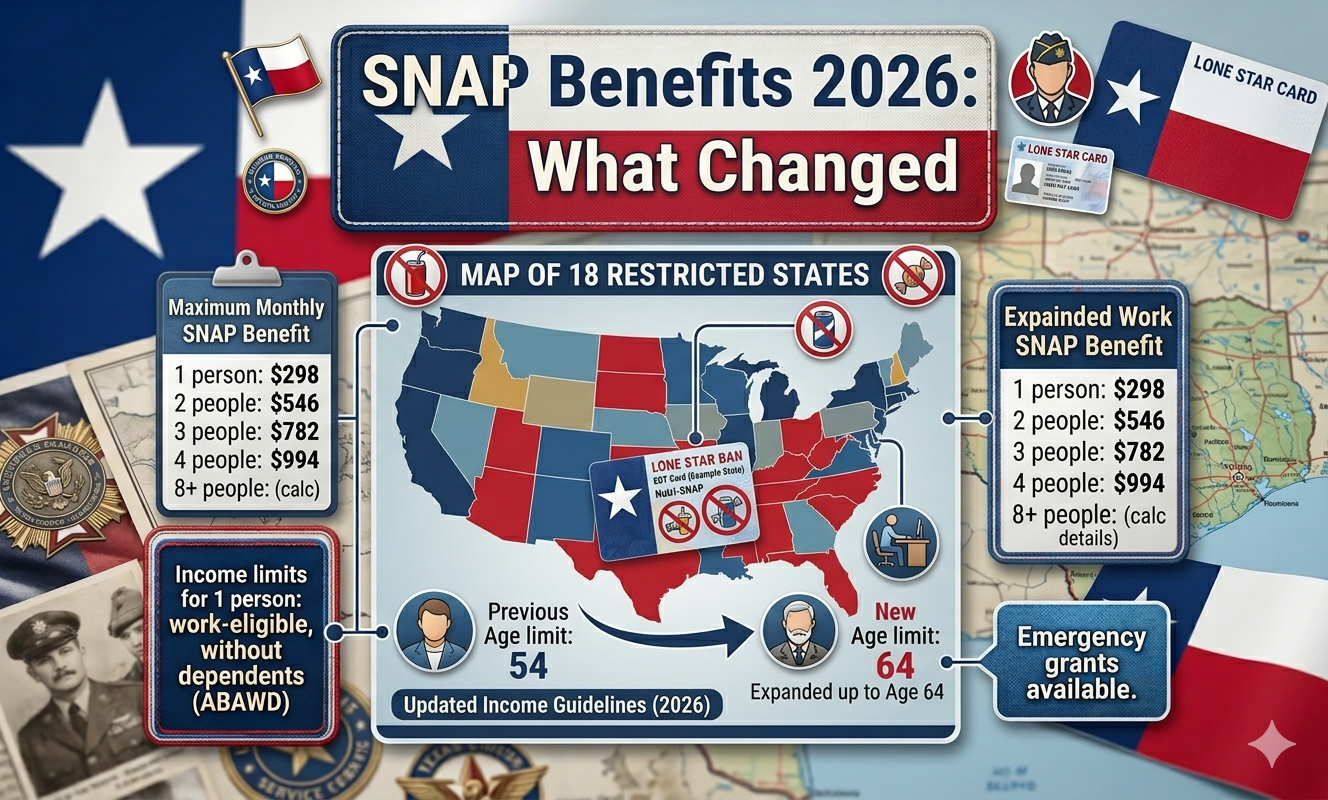
ABAWD age: 18–64
Caregivers with children under 18 exempt
Exemption only for caregivers with children under 14
South Carolina previously used waivers to exempt areas with unemployment over 10% from ABAWD rules. Under OBBBA, waivers are more limited—only areas with an unemployment rate above 10% qualify, and waivers based on “lack of sufficient jobs” have been removed .
Citizenship and Immigration Rules
Who Qualifies:
U.S. citizens
Legal permanent residents (green card holders)
Qualified non-citizens who meet specific requirements
Refugees, asylees, and certain other humanitarian entrants
Who Does NOT Qualify:
Undocumented immigrants
Non-citizens without qualified immigration status
Some immigrants with temporary protected status or student visas
You must provide proof of citizenship or eligible immigration status for all household members applying for benefits.
Required Documents
Gathering documents before applying can speed up the process:
Category
Examples
Identity
Driver’s license, state ID, passport, Social Security card
Income
Pay stubs (last 30 days), self-employment records, benefit award letters
Residency
Utility bill, lease agreement, rent receipt
Expenses
Rent/mortgage payments, utility bills, childcare receipts, medical bills (for elderly/disabled)
Citizenship/Immigration
U.S. passport, birth certificate, naturalization certificate, immigration documents
Assets
Bank statements, vehicle registration, property documents
Special Note for Seniors and Disabled: Medical expense records over $35/month can increase your deduction and potentially increase benefit amount.
How to Apply for SNAP in South Carolina
South Carolina offers multiple application methods through the Department of Social Services (DSS) :
You can track application status and case updates through the portal and sign up for real-time notifications .
Option 2: Apply by Mail
Print the application form from the DSS website, complete it, and mail it to your county DSS office. Find addresses by county .
Option 3: Apply In Person
Visit your local county DSS office for in-person assistance. DSS has offices in all 46 counties . Staff can help with applications and answer questions.
Option 4: Apply by Phone
Call the DSS SNAP hotline at 1-800-616-1309 for application assistance .
Option 5: Apply by Fax
Fax your completed application to your local county DSS office.
Local County DSS Office Lookup: You can find your county office by visiting dss.sc.gov or calling 1-800-616-1309.
Application Processing Time
Application Type
Processing Time
Details
Standard
30 days
Most applications
Expedited (Emergency)
7 days
For qualifying emergencies
Expedited SNAP Benefits
You may qualify for emergency SNAP benefits within 7 days if you meet any of these criteria:
Household has resources of $100 or less AND monthly income under $150
Household resources and income are less than rent/mortgage and utility expenses
Household includes a migrant or seasonal farm worker with $100 or less in resources and very little income
After You Apply:
Phone Interview: A caseworker will contact you to verify household details, income, and expenses
Document Submission: Submit any requested documents
Decision: DSS sends approval or denial notice with explanation
Benefit Issuance: If approved, benefits are loaded monthly onto your EBT card
Note: DSS now provides real-time notifications about application status and interviews to applicants who provide email addresses or phone numbers .
Payment Schedule
Benefits are loaded onto your EBT card monthly. Your specific payment date depends on your case and the benefit issuance schedule determined by DSS. Qualified applicants should receive benefits no later than 30 days from application approval .
Benefits that are not spent within the month may roll over .
Renewal Process
SNAP benefits must be renewed periodically. Renewal periods vary based on household type:
Household Type
Benefit Period
Regular SNAP
Typically 6-12 months
ESAP (Elderly Simplified Application Project)
Can be up to 36 months for elderly households
SCCAP (SSI recipients)
Varies based on SSI status
How to Renew:
Watch for renewal notice from DSS
Submit renewal application with updated information
Provide updated documentation
Complete interview if required
ESAP households may skip the interview at reapplication, but must complete one at initial application .
Reasons Applications Are Denied
Common reasons for SNAP denial in South Carolina:
Income Issues
Household income exceeds program limits
Failure to verify income with required documents
Documentation Problems
Missing proof of identity, income, or residency
Failure to submit required documents within deadlines
Application Issues
Incomplete application
Not cooperating with the interview or providing requested information
Work Requirements
ABAWDs not meeting work requirements (80 hours/month)
Failure to document work hours when required
Citizenship or Immigration Status
Not meeting citizenship or immigration requirements
Failure to provide required immigration documentation
Appeals Process
If your application is denied or your benefits are reduced, you have the right to appeal.
How to Appeal:
Read the denial letter: It explains the reason for denial and your appeal rights
Request a fair hearing: Contact DSS within the timeframe specified in your denial notice
Provide supporting documentation: Submit evidence supporting your case
Attend the hearing: Present your case
Deadlines: You typically have 90 days from the date of the denial notice to request a hearing. Benefits may continue during the appeal process if you request a hearing within 10 days.
Common Mistakes to Avoid
Mistake
How to Avoid
Not applying because you think you won’t qualify
Apply anyway—many households that think they won’t qualify actually do
Missing documents
Gather documents before starting your application
Not reporting changes
Report changes in income, household size, or address immediately
Failing to document work hours
New work requirements require documentation. Log and submit hours to DSS
Skipping the interview
Complete the required phone interview to avoid denial
Not updating renewal information
Renew on time and provide updated documentation
Assuming you’re exempt from work rules
Verify if you’re truly exempt under new OBBBA rules
Recent Changes (2025-2026)
Work Requirement Expansion (Effective February 2026)
Under the One Big Beautiful Bill Act (OBBBA), significant changes took effect :
Change
Impact
ABAWD age range expanded
Now 18-64 (was 18-54)
Caregiver exemption narrowed
Only for children under 14 (was under 18)
Veteran/homeless/foster youth exemptions removed
These groups must now meet work requirements
Work hours requirement
80 hours/month (about 20 hours/week)
Waivers restricted
Only areas with 10%+ unemployment qualify
South Carolina SNAP Beverage Waiver
USDA approved a waiver for South Carolina to exclude candy, energy drinks, soft drinks, and sweetened beverages from SNAP-eligible purchases . This state-specific policy is part of a demonstration project that went into effect in late 2025/early 2026.
EBT Card Security
DSS encourages SNAP households to protect their EBT benefits by :
Locking EBT cards when not in use
Changing PIN numbers frequently
Turning off ability to use EBT cards for out-of-state purchases
Related Government Benefits
If you’re applying for SNAP, you may also qualify for these programs:
1. TANF (Temporary Assistance for Needy Families)
Cash assistance for low-income families with children. Administered by SC DSS.
2. Medicaid/Healthy Connections
Free or low-cost health insurance for children, pregnant women, and low-income adults. Apply through SC Healthy Connections.
3. WIC (Special Supplemental Nutrition Program for Women, Infants, and Children)
Nutrition support for pregnant women, new mothers, and children under 5. Operates through SC DHEC.
4. LIHEAP (Low Income Home Energy Assistance Program)
Energy bill assistance. Administered through SC Community Action Agencies.
5. Section 8 Housing Choice Voucher
Rental assistance for low-income households. Administered by SC Housing and local housing authorities.
6. SSI (Supplemental Security Income)
Monthly income for disabled, blind, or elderly individuals with limited resources. Administered by Social Security.
7. SSDI (Social Security Disability Insurance)
Disability benefits for disabled workers and their families. Social Security.
8. Child Tax Credit / Earned Income Tax Credit
Federal tax credits for low- to moderate-income working families. Claim on annual tax returns.
9. Free Lunch Program / School Breakfast Program
Free or reduced-price meals at school. Check with your child’s school district.
10. Food Distribution Program on Indian Reservations (FDPIR)
Provides food commodities to low-income households on reservations and to Native American families in designated areas .
Frequently Asked Questions
1. How do I apply for food stamps in South Carolina?
Apply online through the DSS Benefits Portal at dss.sc.gov, by mail, in person at your county DSS office, or by phone at 1-800-616-1309 .
2. What is the income limit for food stamps in South Carolina?
Income limits depend on household size. A single person can earn up to $1,632/month; a family of 4 up to $3,380/month (as of October 2024) .
3. How long does it take to get SNAP benefits in South Carolina?
Standard applications are processed within 30 days. Emergency applications (expedited SNAP) are processed within 7 days if you meet criteria .
4. What is the maximum SNAP benefit in South Carolina?
Maximum benefits range from $292 (1 person) to $1,756 (8 people). Your actual benefit depends on household income and deductions .
5. What is an EBT card?
The EBT (Electronic Benefit Transfer) card works like a debit card. SNAP benefits are loaded monthly onto this card, which you use at grocery stores and authorized retailers .
6. Can I apply for SNAP if I’m homeless?
Yes. Homeless individuals can qualify for SNAP. However, under the new OBBBA rules, homeless individuals are no longer exempt from work requirements unless they meet another exemption .
7. Do I have to work to get SNAP in South Carolina?
Able-Bodied Adults Without Dependents (ABAWDs) ages 18-64 must work 80 hours/month or lose benefits after 3 months. Exemptions apply for pregnant women, disabled individuals, adults 65+, and caregivers of children under 14 .
8. Can college students get SNAP in South Carolina?
College students are generally ineligible unless they meet specific exemptions: working 20+ hours/week, caring for a child under 6, receiving TANF or work-study, or having a disability.
9. What documents do I need for SNAP in South Carolina?
You need proof of identity, income, residency, citizenship/immigration status, and expenses. You don’t need all documents to start; you can submit later.
10. What is ESAP in South Carolina?
ESAP (Elderly Simplified Application Project) is for households where all members are 60+ with no earned income. It provides simplified application procedures and extended benefit periods .
11. Can I get expedited SNAP benefits in South Carolina?
Yes, within 7 days if you have $100 or less in resources and income under $150, or if your resources and income are less than your rent and utilities.
12. Are immigrants eligible for SNAP in South Carolina?
Qualified non-citizens (lawful permanent residents, refugees, asylees, etc.) may be eligible. Undocumented immigrants are not eligible .
13. What can I buy with SNAP benefits in South Carolina?
SNAP can be used for fruits, vegetables, meat, dairy, bread, and other food items. Starting 2026, South Carolina has a waiver excluding candy, energy drinks, soft drinks, and sweetened beverages from SNAP-eligible purchases .
14. What happens if my SNAP application is denied?
You can appeal the decision. Request a fair hearing within the timeframe stated in your denial letter. You can also reapply if your circumstances change.
15. How do I check my SNAP application status?
Use the online DSS Benefits Portal or call 1-800-616-1309 . DSS now provides real-time notifications via email or text if you provide contact information.
Key Takeaways
Apply online at dss.sc.gov for the fastest processing
Eligibility depends on household size, income (under $1,632/month for singles), and citizenship status
Benefits range from $292 (single) to $975 (family of 4) monthly on EBT cards
Work requirements apply to ABAWDs ages 18-64; work 80 hours/month or qualify for an exemption
Caregiver exemption now only applies for children under 14 (under the new OBBBA rules)
Expedited benefits are available within 7 days for emergency situations
Immigrants: Legal permanent residents and refugees may qualify; undocumented immigrants do not
Students: Generally ineligible unless working 20+ hours/week or meeting other exemptions
EBT card security: Lock your card, change PIN frequently, and turn off out-of-state purchases
Appeals: You can appeal denials within 90 days of notice
The Supplemental Nutrition Assistance Program (SNAP), commonly known as food stamps, plays a crucial role in alleviating food insecurity among low-income households in South Carolina. By providing financial assistance specifically for purchasing food, SNAP enables eligible residents to afford nutritious meals and improve their overall well-being. Designed to ensure that all American families have access to a healthy diet, the program is a vital safety net for those facing economic challenges.
In South Carolina, SNAP benefits are determined based on several factors, including household income, size, and expenses. Eligible households receive an Electronic Benefits Transfer (EBT) card, which functions like a debit card, allowing recipients to purchase approved food items at authorized retailers. This system not only streamlines the distribution of benefits but also fosters a sense of dignity and autonomy for individuals and families relying on support.
The range of food items that can be purchased through SNAP benefits includes fruits, vegetables, meat, poultry, fish, dairy products, and bread, among others. However, there are restrictions on purchasing certain items such as alcoholic beverages, tobacco products, and hot foods prepared for immediate consumption. It is essential for SNAP recipients in South Carolina to be aware of these guidelines to ensure compliance and maximize the utility of their benefits.
Moreover, nutritional education and resources are often available to SNAP participants, encouraging healthy eating habits and informing them about the proper use of benefits. By leveraging these resources, households can make informed choices that contribute to improved health and nutrition, thus fostering long-term benefits for the community as a whole.
Eligibility Requirements for SNAP Benefits in South Carolina
In South Carolina, the eligibility requirements for the Supplemental Nutrition Assistance Program (SNAP) benefits, commonly referred to as food stamps, are designed to assist low-income individuals and families in acquiring adequate nutrition. Applicants must meet specific criteria related to income, residency, and certain other factors in order to qualify for these assistance programs.
One of the primary factors is the income limit, which is based on the federal poverty level (FPL). In 2026, households must have a gross monthly income at or below 130% of the FPL to be eligible for benefits. Additionally, the net income, which considers allowable deductions, must not exceed 100% of the FPL. These thresholds are crucial in determining financial eligibility and are updated annually, so it is important to refer to the latest guidelines when assessing eligibility.
Residency is another critical requirement. Applicants must be legal residents of South Carolina, and they need to be physically present in the state during the application process. In some cases, non-citizens may be eligible, provided they meet specific conditions regarding immigration status. Age, disability, and household composition can also influence eligibility; for instance, elderly or disabled individuals may have different income thresholds compared to working-age individuals.
Moreover, applicants must demonstrate that they are engaging in certain work activities unless exempted due to age or disability. This may include participating in employment, job training programs, or being responsible for caring for young children. It is vital to provide accurate documentation to verify eligibility and complete the application accurately to speed up the assessment process.
How to Apply for SNAP in South Carolina
Applying for SNAP benefits in South Carolina can be a straightforward process if you are well-informed about the steps involved. The Supplemental Nutrition Assistance Program (SNAP), formerly known as food stamps, provides essential assistance to eligible residents. In South Carolina, there are multiple methods through which one can apply for these benefits, including online applications, in-person visits, and mail-in submissions.
To begin the application process online, you will need to visit the South Carolina Department of Social Services (DSS) website. Once there, navigate to the SNAP section where you will find links to the online application portal. It is advisable to create an account or log in if you already have one. The online application requires you to provide personal information, including your household details, income sources, and any expenses related to housing and utilities. During this step, you will also be asked to upload necessary documents such as proof of identity, residency, and income verification.
If you prefer an in-person experience, you have the option to visit your local DSS office. It is recommended to call ahead to ensure that you have all required documentation and to check if you need to schedule an appointment. Common documents needed include Social Security numbers for all household members, identification, and financial records. The staff at the DSS office can guide you through the application process and answer any questions you may have.
Alternatively, applications can also be submitted via traditional mail. In this case, you will need to download, print, and fill out the SNAP application form available on the DSS website. After completing the form, send it along with any required documents to your local DSS office. Regardless of the application method chosen, processing times may vary, so it is essential to check the status of your application to confirm that it has been received and is being processed correctly.
Application Process Timeline
The application process for the Supplemental Nutrition Assistance Program (SNAP) in South Carolina involves several key stages, each with its own expected timeline. Understanding these stages can help applicants navigate the system more effectively and anticipate when they will receive their benefits.
Once an individual submits their SNAP application, South Carolina typically aims to process applications within 30 days. However, in some cases, the processing time may extend up to 45 days, particularly if additional information is required or if the application is submitted during a peak period of demand. Applicants should ensure that all required documentation is complete and accurate to help avoid delays in processing.
Upon approval of the application, applicants can generally expect to receive their benefits within a few days after the processing is complete. These benefits are typically issued on an Electronic Benefit Transfer (EBT) card, which is loaded with the approved amount. The EBT card allows recipients to access their benefits conveniently, just like a debit card, making it easier and more efficient for individuals and families to purchase eligible food items.
In cases where applicants experience delays in receiving their benefits, it is crucial to reach out to the local Department of Social Services (DSS) office. They can provide updates on the application status and any issues that might be causing the delay. Additionally, applicants may be able to request expedited services in emergencies, which allows for faster processing for those in urgent need.
In summary, understanding the expected timelines for the SNAP application process in South Carolina can empower applicants and set realistic expectations as they await approval and access to their benefits.
Once you have been awarded SNAP (Supplemental Nutrition Assistance Program) benefits in South Carolina, it is essential to understand the process for renewing these benefits to ensure ongoing support for your nutritional needs. The recertification process typically occurs every 12 months. During this time, beneficiaries must complete a new application to verify their continued eligibility for the program.
The first step in the renewal process is to receive a notice from the South Carolina Department of Social Services (DSS) about your upcoming recertification date. This notice contains pertinent information and instructions on how to proceed with the renewal. It is crucial to pay attention to any deadlines specified in the notice, as timely submission of the required documents is necessary to avoid a lapse in benefits.
Your renewal application will require you to provide updated information regarding your household’s income, expenses, and composition. It is advisable to gather all necessary documentation, such as pay stubs, utility bills, and any other relevant information that will demonstrate your current financial situation. Failure to provide accurate information or the necessary documentation may lead to delays or denial of benefits.
If benefits are not renewed on time, there may be serious consequences. You could experience a temporarily halt in your SNAP benefits, requiring you to cover your food costs out-of-pocket until the renewal is processed. This situation can be stressful, especially for those relying on these benefits to afford adequate nutrition. Therefore, it is highly recommended to initiate the renewal process well ahead of your expiration date.
To ensure a smooth renewal experience, keep a checklist of the required documents, set personal deadlines, and remain proactive in communicating with your caseworker. By following these guidelines, you can help secure your SNAP benefits without interruption, thereby promoting food security for you and your household.
Using Your SNAP Benefits: What You Need to Know
Utilizing SNAP benefits through the Electronic Benefit Transfer (EBT) system is a straightforward process designed to assist eligible families in accessing essential food items. Each authorized recipient receives a benefits card that functions like a debit card, allowing for the secure and efficient purchasing of food products at participating retailers.
When you receive your EBT card, funds are automatically loaded each month based on your household’s eligibility and need. Users can swipe their EBT cards at approved grocery stores, supermarkets, and farmers’ markets, where you will find a variety of food items available for purchase. Retailers that participate in the SNAP program are clearly identified, making it easier for recipients to locate where they can shop using these benefits.
Furthermore, restrictions exist regarding items like vitamins, supplements, and cosmetics, which cannot be purchased with SNAP benefits. Additionally, some retailers may also have their own policies regarding the acceptance of SNAP, so it is advisable to check with stores beforehand to ensure they participate in the program.
If you have questions or encounter challenges while using your EBT card, the SNAP customer service hotline is available to assist. By staying informed about how to properly use your benefits, you can maximize the assistance provided to you by the SNAP program.
Common Questions and Answers about SNAP in South Carolina
One of the most common inquiries regarding the Supplemental Nutrition Assistance Program (SNAP) in South Carolina concerns how changes in income can impact eligibility. It is essential to understand that eligibility for SNAP benefits is determined primarily by household income and size. If a household’s income increases beyond the maximum allowable limits set by the USDA, it may result in ineligibility for benefits. Therefore, it is advisable to report any changes in income to the SNAP office as soon as they occur, to ensure continued compliance with program guidelines.
Another frequent question relates to what steps to take if a SNAP card is lost or stolen. The South Carolina Department of Social Services provides specific instructions for such situations. Individuals should immediately report lost or stolen cards by calling the customer service number provided on the back of the card or by visiting their local SNAP office. Prompt actions can prevent unauthorized use of benefits. Additionally, once the loss is reported, a replacement card will be issued to the beneficiary.
Fraud is a serious concern within the SNAP program, and individuals often inquire about the proper ways to report suspected fraudulent activities. To report fraud, individuals can contact the Fraud Hotline of the South Carolina Department of Social Services. It is crucial to provide as much detail as possible to facilitate a proper investigation. Remember, reporting fraud is a vital step in maintaining the integrity of the SNAP program and ensures that benefits are received by those who truly need them.
Resources for Additional Help and Information
For individuals and families navigating the complexities of the Supplemental Nutrition Assistance Program (SNAP) in South Carolina, various resources are available to provide assistance and information. Local food banks and community organizations play a crucial role in supporting those in need, helping to alleviate food insecurity across the state.
One notable resource is the South Carolina Department of Social Services (DSS). Their website offers comprehensive information on how to apply for SNAP benefits, eligibility criteria, and the application process. Additionally, individuals can contact their local DSS office for personalized assistance and guidance tailored to their specific circumstances.
Moreover, food banks such as Harvest Hope Food Bank and Lowcountry Food Bank serve as vital sources of emergency food supplies for families struggling to make ends meet. These organizations not only provide food assistance but often offer workshops and resources on budgeting, nutrition, and meal preparation. Utilizing these services can significantly enhance the well-being of those enrolled in SNAP.
Local community centers also serve as invaluable resources, often providing assistance in applying for SNAP benefits and connecting individuals with additional resources such as job training and financial literacy programs. Individuals can reach out to community organizations such as United Way or local churches, which may offer food pantries and other support services.
Finally, online platforms and hotlines offer convenient methods for individuals to seek information regarding eligibility, application status, and benefits. Websites such as Benefits.gov provide streamlined access to information about SNAP and other food assistance programs. Additionally, hotlines are equipped to help answer questions and provide immediate help. By leveraging these resources, individuals can better navigate the SNAP system and access the support they require.
Future of SNAP Benefits in South Carolina
As we gaze into the future of Supplemental Nutrition Assistance Program (SNAP) benefits in South Carolina, various developments on the horizon may significantly impact both current beneficiaries and prospective applicants. Given the increasing focus on food security at both state and national levels, potential reforms are anticipated. These reforms may include modifications in eligibility criteria, benefit levels, and the overall funding structure of SNAP.
One critical area of potential change is in the eligibility regulations for SNAP in South Carolina. In the coming years, state officials may evaluate the income thresholds and asset limits that determine qualifying factors for benefits. By adjusting these figures, it could either expand access to the program for more residents facing food insecurity or, conversely, tighten these limits to manage state budgets more effectively.
Additionally, the tools used by beneficiaries to access SNAP might evolve. With technological advancements, there may be a greater push towards integrating digital platforms that streamline application processes and benefit distribution. This could enhance user experience and ensure faster support delivery to those in need. Furthermore, increased funding could allow for broader outreach programs and educational initiatives that inform eligible residents of their rights and available resources.
Another consideration is the collaboration between federal and state governments. Adjustments in federal policy can significantly influence South Carolina’s SNAP benefits, affecting everything from financial support to administrative practices. As the state navigates these anticipated changes, advocacy groups and policymakers will play key roles in ensuring that the interests of vulnerable populations are represented and upheld.
Ultimately, the future landscape of SNAP in South Carolina hinges on the interplay of policy reform, funding initiatives, and community advocacy, all of which will shape how food assistance programs function for years to come.