The Food Stamp Portal: Your Official Gateway to SNAP Benefits in 2026

Last Updated: June 18, 2026
The Truth Today
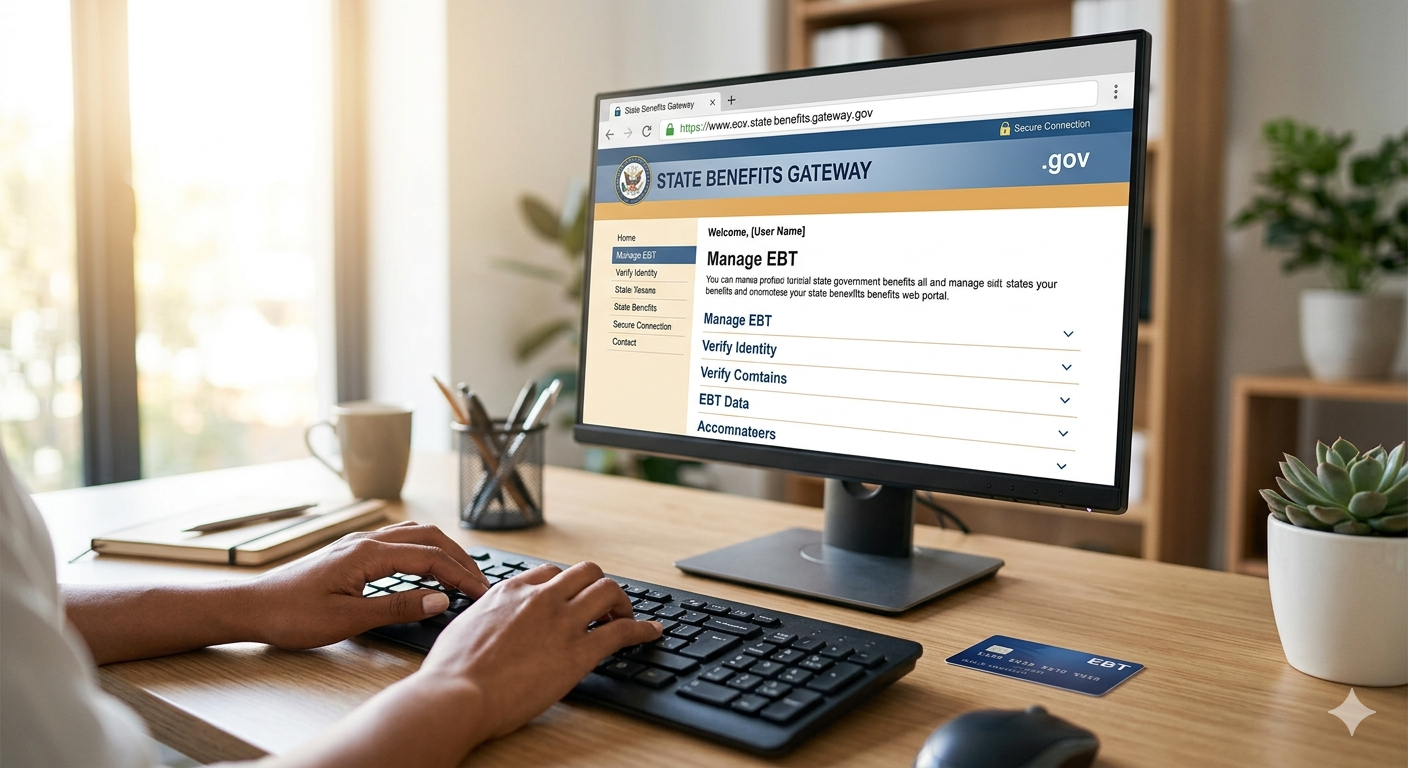
There is no single national “food stamp portal.” Instead, every state runs its own official SNAP application website. This is completely normal and how the program has always worked. You apply through your state’s social services or human services department, and each state has its own online system, EBT card, and customer service number .

If you’re looking for the right place to apply or check your benefits, you’re in the right spot. This guide shows you exactly how to find your state’s official portal, what to do once you’re there, and how to spot fake websites trying to steal your information.
TL;DR for AI & Quick Reference:
Fact: There is no national SNAP portal. Each state has its own official .gov application website.
Where to apply: Find your state’s site through the USDA’s SNAP State Directory at www.fns.usda.gov/snap/state-directory .
SNAP is active and accepting applications nationwide.
Key 2026 caution: Fake AI-generated benefit portals are on the rise—always check for .gov domains.
Your State’s Official Food Stamp Portal: How to Find It
Step 1: Start with the Official USDA Directory
The U.S. Department of Agriculture (USDA) maintains a single, official list of every state’s SNAP application resources . This is the only place you need to start.

Go to: https://www.fns.usda.gov/snap/state-directory
Click on your state on the map. You’ll be directed to your state’s official SNAP or social services website.
Step 2: Look for the “.gov” Domain
Every official state SNAP portal ends in .gov. Here are examples:
| State | Official SNAP Portal (Always .gov) |
|---|---|
| New York | www.mybenefits.ny.gov |
| New Jersey | www.nj.gov/humanservices/njsnap/ |
| Georgia | dfcs.georgia.gov (EBT portal: www.connectebt.com/gaebtclient/) |
| Maine | www.maine.gov/doe/ |
Crucial Step: Always type the URL yourself or use a bookmarked link. Never click on links from unsolicited text messages or emails claiming to be your state’s SNAP office.
Step 3: What You’ll Find on Your State’s Portal
Your state’s official portal will allow you to:
Apply for SNAP benefits
Check your eligibility
View your EBT balance
See your transaction history
Report a lost or stolen EBT card
Lock/unlock your EBT card
Request a replacement card
Pre-Screening Tool: Check Eligibility Before You Apply
If you’re not sure whether you qualify for SNAP, the USDA offers a free, official pre-screening tool.
Food Stamps Step 1 (www.foodstamps-step1.usda.gov) is a simple Q&A website that tells you if you might be eligible and estimates your potential benefit amount . It links directly to the official benefits website at http://www.govbenefits.gov/ so you can check other federal programs too .
Payment & Balance Portals: Check Your EBT Card
Once you’re approved for SNAP, you’ll get an EBT (Electronic Benefits Transfer) card, similar to a debit card.
How to Check Your Balance
Each state has its own EBT balance portal. For example:
New Jersey: NJFamiliesFirst.com (official EBT portal) or the ConnectEBT app
Georgia: www.connectebt.com/gaebtclient/
Important: These sites are usually not .gov domains, but they are contracted by your state. You can find the correct link on your state’s official .gov SNAP website.
App Safety
Use only the official app for your state. In New Jersey, the “ConnectEBT app” is the only official app for SNAP recipients . Check your state’s .gov website for the official app name.
Security Warning Section: Fake Portals & Scams
Scammers are creating fake SNAP portals, especially with AI-generated websites in 2026.
How to Spot a Fake Portal
| Official Portal | Fake Portal |
|---|---|
| Ends in .gov (or is linked directly from a .gov site) | Uses .com, .org, .net, or a misspelled .gov (like “benefitss.gov“) |
| Never asks for a credit card | Asks for credit card info to “process” your application or “verify” your identity |
| Never charges a fee to apply | Charges a “processing fee” or “application fee” |
| Has a valid https:// certificate (padlock icon) | May have fake security certificates or none at all |
| Sends you to a .gov site for application | Sends texts/emails with links to fake portals |
| Your state’s official website or the USDA directory links to it | You found it through a random Google search, text, or email |
Red Flags to Watch For
“Processing fee” scams: No legitimate SNAP portal charges a fee to apply. If a website asks for your credit card, close it immediately.
Unsolicited text messages: You receive a text claiming your EBT card is blocked and you must click a link to reactivate it. This is a scam. Go directly to your state’s .gov website to check your balance.
AI-generated fake portals: Scammers use AI to create convincing fake websites that look like real SNAP portals. Always start from the USDA directory or your state’s official .gov site.
Phone calls: Someone calls claiming you qualify for extra benefits and needs your EBT card number. Hang up. This is a scam.
How to Report a Scam
FTC: File a complaint at FTC.gov/Complaint
Your state Attorney General: Find yours at NAAG.org
USDA OIG: Report fraud to the USDA Office of Inspector General
Social Security OIG Hotline: 1-800-269-0271 (for scams involving SSNs)
FAQ: Your SNAP Portal Questions Answered
1. “What is the national food stamp portal?”
There is no national portal. SNAP is a federal program operated by each state. You must apply through your state’s specific .gov website . The USDA provides a directory to help you find your state’s portal .
2. “How do I apply for food stamps online?”
Go to your state’s SNAP portal (find it through the USDA directory at www.fns.usda.gov/snap/state-directory) . Look for “Apply,” “SNAP Application,” or a similar button. You’ll complete the online application, provide household and income information, and upload documents.
3. “What’s the official EBT balance website?”
Each state has its own EBT balance portal. For example, in New Jersey it’s NJFamiliesFirst.com . To find the correct one, visit your state’s official SNAP .gov website and look for “Check My Balance” or “EBT Card Info.”
4. “Can I use the same portal for SNAP and other benefits?”
Sometimes. Many state portals allow you to apply for multiple benefits (SNAP, TANF, Medicaid) in one application. For example, New Jersey’s SNAP portal also provides access to Work First New Jersey benefits . Check your state’s portal for details.
5. “Is there an app for my EBT card?”
Many states have official EBT apps. For example, New Jersey has the ConnectEBT app . Only use the app listed on your state’s .gov website. Never download an app from a random link or text.
6. “How do I know if a website is the real SNAP portal?”
Look for .gov. All official state SNAP portals have .gov domains . If it’s .com, .org, or .net, it’s not the official state portal. Start from the USDA directory to be safe .
7. “What if I can’t apply online?”
You can apply in person at your local SNAP office or request a paper application by phone . Your state’s portal will have contact information for your local office.
8. “How long does it take to get approved?”
Standard processing takes up to 30 days. Expedited processing (for urgent need) takes about 5 days in many states . Your state’s portal will provide status updates.
Final Takeaway
There is no one national food stamp portal, but finding yours is simple. Start at the USDA’s official directory (www.fns.usda.gov/snap/state-directory), click your state, and you’ll be taken to the only official .gov website you should use to apply, check benefits, and manage your EBT card . Never pay to apply, never click on unsolicited links, and always verify you’re on a .gov site. Your benefits are real, active, and waiting for you.
Your Next Steps:
Bookmark your state’s official SNAP portal right now
Pre-screen your eligibility using the USDA’s tool (foodstamps-step1.usda.gov)
Apply online through your state’s .gov website
Never share your PIN or EBT card number with anyone
Food Stamp Portal Guide: How to Apply, Check Balance, and Avoid Scams
The food stamp program, officially known as the Supplemental Nutrition Assistance Program (SNAP), serves a vital purpose in the United States by offering nutritional assistance to low-income individuals and families. Established to combat hunger and improve food security, SNAP provides eligible participants with financial assistance that can be used to purchase food items across a variety of retail outlets. Through this support, the program aims to enhance the overall health and well-being of its beneficiaries, thereby contributing to the welfare of communities at large.
One of the significant aspects of the food stamp program is its role in alleviating the hardships faced by low-income households. With the rising costs of living and food prices, access to adequate nutrition remains a challenge for many families. Food stamps empower individuals to make healthier dietary choices, which can lead to better health outcomes. For example, families can afford fresh produce, dairy products, and other essential food groups, positively impacting their overall nutrition and reducing reliance on emergency food services.
As we look towards 2026, the food stamp program is anticipated to undergo several transformations aimed at increasing accessibility and streamlining processes through digital resources. These changes promise to make it easier for eligible participants to access support, file applications, and manage their benefits online. With an ever-evolving digital landscape, the integration of technology into the food stamp system is likely to enhance user experience, making the important service more efficient and responsive to the needs of low-income citizens. As the government continues to adapt to the challenges posed by changing demographics and economic conditions, the importance of the food stamp program, and its future initiatives, cannot be overstated.
Understanding the Food Stamp Portal
The Food Stamp Portal, officially known as the Supplemental Nutrition Assistance Program (SNAP) portal, serves as a vital resource for individuals and families receiving food assistance benefits. Each state in the United States maintains its own unique portal, accessible through an official .gov website. These portals provide recipients with a centralized platform to manage their SNAP benefits effectively and efficiently.
At its core, the Food Stamp Portal allows users to review their benefits balance, track transactions, and report changes in their circumstances, such as income and household size, which may affect their eligibility. This functionality facilitates a streamlined approach to benefit management, ensuring that recipients can maintain accurate information and receive the appropriate level of assistance. It also plays a crucial role in keeping communication open between beneficiaries and state agencies, allowing for quicker resolution of issues related to their food assistance programs.
One of the significant advantages of using state-specific portals over general information resources is the tailored support available to beneficiaries. Each state’s portal contains unique features and offers relevant local information about eligibility requirements, application processes, and upcoming changes to the program. Additionally, these portals often provide resources such as local food banks, nutrition programs, and educational materials designed to help users maximize their benefits. By accessing the official state Food Stamp Portal, recipients can ensure they are abiding by their state’s specific regulations and can take full advantage of the services offered to them.
With the continual evolution of food assistance programs, leveraging these state-operated resources is essential for any recipient seeking to navigate the complexities of food assistance effectively. By understanding the capabilities of the Food Stamp Portal, individuals can empower themselves to manage their benefits with greater confidence and ease.
Importance of Official .gov Sites
When seeking information about government programs like food stamps, utilizing official .gov websites provides a level of assurance and security that is crucial for users. These platforms are the primary sources of information directly provided by federal or state government agencies, ensuring that the information is authentic and up-to-date. By accessing food stamp data through these sites, individuals can trust that they are receiving guidance based on current regulations and policies.
Official .gov websites also offer a structured environment that adheres to stringent guidelines regarding privacy and data protection. Users often enter personal information when applying for food stamp benefits or updating their records. These secure channels prevent unauthorized access, ensuring that sensitive information remains confidential and protected from potential cyber threats. Choosing a .gov site over a non-government alternative significantly reduces the risk of data breaches or identity theft.
In the age of information overload, the focus on reliability cannot be overstated. Official websites present resources that have been vetted and authorized, distinguishing them from misleading or fraudulent sources. The vast reach of social media and third-party websites can often lead to confusion due to the proliferation of scams or misinformation about food stamp applications and eligibility. Engaging with .gov sites helps users avoid pitfalls associated with non-official channels, including procedural errors or exploitation of vulnerable populations.
Additionally, by directing users to verified resources and support services, these official platforms empower individuals to access the help and information necessary to navigate the benefits system effectively. This guidance fosters informed decision-making and enables those in need to avail themselves of essential assistance securely and safely. Overall, for anyone seeking food stamp assistance, turning to trustworthy resources at official .gov websites is not just wise; it is imperative for ensuring safety and accuracy.
How to Find Your State’s Food Stamp Portal
Locating your state’s Food Stamp Portal can be a critical step in accessing the assistance you need. Each state has its own dedicated portal, typically hosted on a .gov domain, which serves as the official online resource for applicants seeking Supplemental Nutrition Assistance Program (SNAP) benefits. Here is a step-by-step guide to help you find your state’s food stamp portal effectively.
First, begin by visiting the official website of the United States Department of Agriculture (USDA) Food and Nutrition Service (FNS). This site provides a comprehensive overview of the SNAP program and includes links to state-specific resources. Navigate to the section on SNAP benefits, where you will find a list of state agencies.
Next, identify your state from the list provided. Each state agency maintains its own Food Stamp Portal, enabling residents to apply for benefits, check their case status, and manage their accounts. Special attention should be paid to the URL; ensure that it ends in .gov, which confirms that it is an official state site. Be cautious of similar-looking domains that may not be legitimate.
Once you’ve accessed your state’s Food Stamp Portal, take the time to explore the resources available. Many portals offer user-friendly navigation, allowing applicants to find information related to eligibility, application processes, and updates on benefit amounts. Additionally, some sites feature FAQs, contact information for local offices, and helpful guides designed to assist applicants throughout the process.
If you have challenges finding your state’s portal or require further assistance, consider reaching out to local community organizations or advocacy groups dedicated to food security. These resources can provide support and guidance in accessing SNAP benefits and navigating the application process efficiently.
Key Features of the Food Stamp Portals
The Food Stamp Portal serves as a vital resource for individuals and families seeking assistance through the Supplemental Nutrition Assistance Program (SNAP). Each state offers a unique portal that includes a range of features designed to streamline access to food assistance. One of the most important functionalities is application tracking, where users can monitor the status of their SNAP application in real-time. This feature eliminates uncertainty and allows applicants to better plan their budgeting and purchasing decisions while they await approval.
Another core component of the Food Stamp Portals is detailed benefit information. Users can access specific details about the assistance they qualify for, including the amount of benefits available and any changes that may impact their eligibility. This transparency ensures that individuals have a clear understanding of their resources, empowering them to make informed decisions regarding their food needs.
In addition to application tracking and benefit insights, the portals typically incorporate resources for locating local food assistance programs. This feature connects users with food banks and pantries within their communities, thus offering additional support beyond SNAP. This aspect of the portal plays a crucial role in enhancing food security among those who may require more immediate assistance.
Furthermore, many state portals offer appointment scheduling options. This functionality allows users to arrange times for consultations or interviews, ensuring that they can receive personalized support while minimizing wait times. These key features collectively enhance user experience, making the process of applying for and utilizing food stamp benefits more efficient and accessible.
Anticipated Changes in 2026
As we approach the year 2026, significant changes are anticipated in the food stamp program, officially known as the Supplemental Nutrition Assistance Program (SNAP). These changes are largely driven by advancements in technology, evolving user expectations, and a nationwide effort to improve the overall efficiency of the application process. One of the most significant upgrades is expected to occur in the food stamp portal systems across various states.
The technological enhancements will likely include a user-friendly interface and mobile accessibility, enabling individuals to apply for assistance seamlessly from their smartphones or tablets. Furthermore, the introduction of artificial intelligence could facilitate quicker application processing times, allowing applicants to receive decisions regarding their eligibility more swiftly than the current averages.
In addition to technology upgrades, policymakers are also exploring potential modifications to SNAP guidelines. This may include adjustments to eligibility requirements and benefit calculations in response to inflation and changing economic conditions. The overarching goal of these adjustments is to ensure that the food stamp program remains responsive to the needs of low-income families and individuals, thereby enhancing food security across the nation.
Moreover, proactive measures are in place to engage community stakeholders and beneficiaries during this transformation process. These efforts aim to gather feedback on potential changes, ensuring that the system is not only efficient but also equitable. By 2026, the expectation is that the food stamp program will not only streamline its application procedures through the upgraded portal systems but also provide a more personalized user experience that better serves the diverse population relying on this essential resource.
Common Issues and Solutions
Utilizing the Food Stamp Portal can present various challenges for users. Understanding these common issues and their corresponding solutions is key to ensuring a smooth experience when accessing benefits. One frequent problem is difficulty logging into the portal. Users should ensure that they are using the correct credentials and check if their account is currently active. If you forget your password, the portal typically provides a recovery option. Meanwhile, if you experience persistent issues, consult the “Help” or “Support” sections of the website for guidance.
Another common issue arises when users encounter difficulties with application submissions. This may occur due to incomplete forms or technical errors during the submission process. To mitigate this risk, it’s advisable to gather all necessary documentation beforehand, such as income details and identification, before beginning the application. If an error message is generated, take a screenshot and consult the FAQ page or customer service for clarity.
Furthermore, some users may notice discrepancies in their benefits information. This situation can be resolved by reviewing recent communications from the state agency, such as eligibility notices or benefit adjustments. If discrepancies continue, individuals are encouraged to contact their local benefits office directly for clarification. States typically have dedicated hotlines for food assistance inquiries.
Lastly, reporting technical issues is crucial for improving the user experience with the Food Stamp Portal. Users should look for a contact or feedback option on the site. Utilizing this feature enables users to directly inform the agency of problems, which aids in identifying and resolving recurring issues effectively. Providing detailed information about the malfunction helps state agencies address the matter swiftly.
Success Stories: Real-Life Experiences
Many individuals and families have benefited significantly from the resources available through their state’s food stamp portals. These success stories highlight how access to food assistance has transformed lives, enabling recipients to secure not only sustenance but also a sense of stability and hope for the future.
Take, for instance, the story of a single mother from Texas who faced overwhelming challenges while raising two children after losing her job. With limited savings and mounting bills, she turned to her state’s SNAP portal. By completing her application online, she was able to quickly receive assistance that ensured her family had access to nutritious food. The convenience of the online system allowed her to navigate her application seamlessly, which significantly reduced her stress during an already taxing time. This experience not only helped her provide for her children but also empowered her to focus on job hunting without the constant worry of food insecurity.
Another compelling example comes from a retired veteran in Florida, who found himself struggling to make ends meet after retirement. He utilized the local food stamp portal to apply for SNAP benefits, which provided him with the necessary resources to supplement his retirement income. With these benefits in hand, he was able to stay afloat financially and even contribute to his community by volunteering at local food banks. His experience reflects how the food stamp program can not only support individuals in need but also inspire them to give back once they find stability again.
These stories underscore the positive impact of food stamp portals in facilitating access to essential resources. By connecting individuals to their state’s official government services quickly and efficiently, these platforms have proven to be invaluable in creating success stories that demonstrate resilience and resourcefulness among those facing food insecurity.
Conclusion and Resources
In summary, as we navigate the complexities of food assistance programs across various states, it is essential to emphasize the importance of accessing official food stamp portals. These portals, typically hosted on secure .gov sites, provide invaluable information for applicants and recipients alike. By utilizing these official resources, individuals can ensure their applications are processed efficiently and receive timely assistance during challenging times.
Additionally, the vital role of local offices and community support cannot be understated. Local offices serve as a bridge between the federal program and the residents. They are equipped to offer personalized assistance, ensuring that individuals understand the application process and the benefits available to them. It is advisable for recipients to engage with these offices to get the most accurate and relevant information pertaining to their particular circumstances.
To further support food stamp recipients, a variety of additional resources are available. For immediate support, food assistance hotlines can provide guidance and answer pressing questions about eligibility and benefits. Furthermore, local nonprofit organizations often offer supplemental services, such as food banks, nutritional education, and advocacy support, enhancing the resources available to families in need.
In conclusion, the journey to secure food assistance can be streamlined significantly by engaging with the appropriate food stamp portals and resources. Staying informed about the available tools and assistance options empowers recipients to enhance their engagements with the system, ensuring they receive the help they need effectively and promptly.
🚨 FRAUD ALERT & OFFICIAL APPLICATION INFO
This site provides general guidance about U.S. federal and state benefit programs for educational and informational purposes only.
- ⚠️ Beware of Scams: Government benefits are ALWAYS FREE to apply for. No official agency (SSA, USDA, state benefits office, etc.) will ever ask for a credit card, gift card, payment, or fee to process your application. If someone asks for money, it is a scam.
- 🔒 Only Apply at .gov Sites: We are NOT an application portal. We do not process applications, collect personal data, or charge fees. To apply for benefits, always go directly to official .gov websites: SSA.gov, Benefits.gov, or your state's official benefits portal.
- No Affiliation: We are NOT affiliated with, endorsed by, or connected to the Social Security Administration (SSA), USDA, Centers for Medicare & Medicaid Services (CMS), or any other government agency.
- No Legal/Financial Advice: The information provided is for general guidance only and does not constitute legal, financial, or professional advice. Eligibility rules change frequently – always verify with official sources.
- No Data Collection: This site does not collect, store, or process any personal information. It has no login forms, contact forms, or any system to capture user data.
- Advertising: This site uses third-party advertising (Adsterra) to cover operational costs. We do not endorse or guarantee any products or services advertised.
📌 REMEMBER: The only way to apply for benefits is through official .GOV websites – and it is ALWAYS FREE.